
- The Raw Material Sets the Foundation
- Drying Must Be Treated as a Process
- Clean Handling Protects the Finished Crop
- Sorting Creates Greater Uniformity
- Moisture Needs Continued Attention
- Packaging Protects the Processing Work
- Storage Can Preserve or Undermine Quality
- Transportation Is Part of Quality Preservation
- The Factory Is Not the End of the Story
- Quality Is a Chain
- Buyers Can Ask Better Questions
- Preserving Quality Requires Continuity
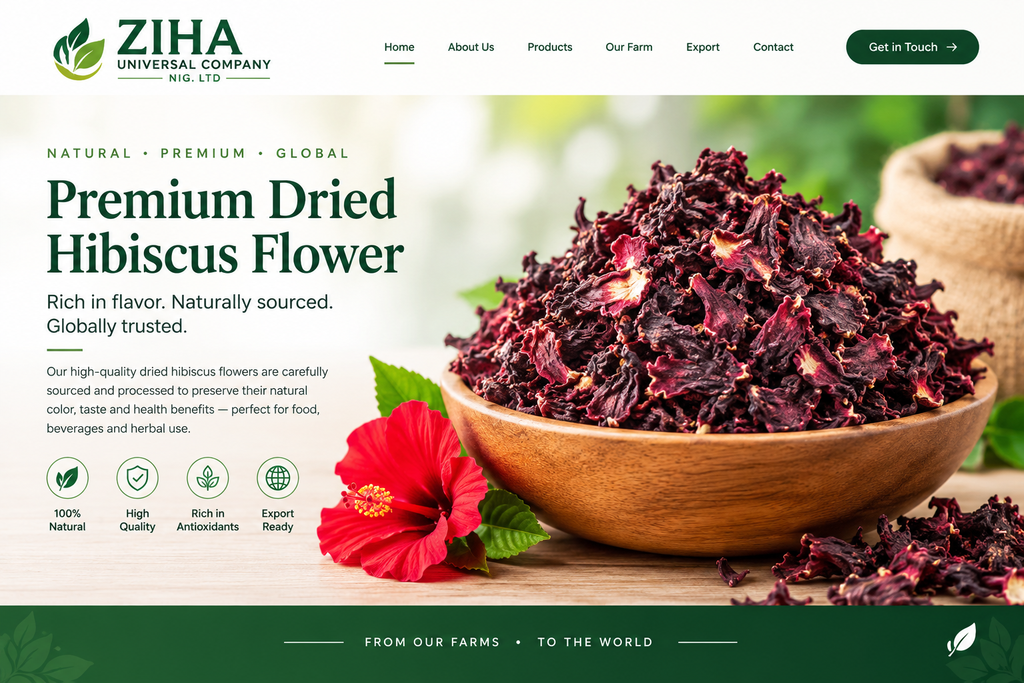
A dried hibiscus calyx may look simple when it reaches a buyer, but its final condition reflects many stages of agricultural and commercial handling.
From the moment the crop is harvested to the time it enters a manufacturer’s facility, Hibiscus sabdariffa is exposed to decisions that can influence its appearance, cleanliness, moisture, physical condition, and suitability for further use.
Preserving quality is therefore not a single task. It is a continuous process.
The Raw Material Sets the Foundation
Every finished dried hibiscus product begins with harvested plant material.
The condition of that material influences what can be achieved during later processing. Appropriate harvesting and careful initial handling help protect the useful characteristics of the crop.
Processing can improve and organize the material, but it cannot completely transform unsuitable raw material into a different product.
This is why quality management starts before drying begins.
Drying Must Be Treated as a Process
Drying is more than simply removing water.
The process affects the condition in which the calyxes remain after moisture has been reduced. Drying practices can influence color, texture, aroma, and the product’s ability to remain stable during subsequent storage.
The exact approach may depend on local conditions and the production system, but the objective remains consistent: produce properly dried material suitable for the intended application.
Clean Handling Protects the Finished Crop
Once the material has been harvested and dried, keeping it clean becomes increasingly important.
Processing and handling areas should be managed to reduce unnecessary exposure to dust, dirt, pests, moisture, and other unwanted materials.
Clean handling is especially important when dried hibiscus is intended for food, beverage, or herbal applications.
A clean finished product begins with disciplined handling throughout the process.
Sorting Creates Greater Uniformity
Natural agricultural material is rarely perfectly uniform.
Sorting helps organize the dried hibiscus and remove material that does not meet the agreed requirements.
Depending on the specification, this may include unwanted plant parts, foreign matter, or excessive damaged material.
The result is a product that is easier for the buyer to handle and process.
Moisture Needs Continued Attention
Achieving an appropriate moisture level during drying is only part of the challenge.
Dried hibiscus can be exposed to humid conditions after drying, particularly during handling, storage, and transportation.
If the material absorbs moisture again, its condition may change.
This is why moisture management continues beyond the drying area and into packaging and storage.
Packaging Protects the Processing Work
A carefully prepared product still needs appropriate packaging.
Suitable sacks, liners, closures, and labeling help protect the material during storage and transportation.
Packaging should also be practical for the buyer’s handling system.
For bulk trade, package consistency can simplify receiving, counting, warehouse organization, and inventory management.
Storage Can Preserve or Undermine Quality
The warehouse is another important stage.
Dried hibiscus should be kept in an environment that limits excessive humidity, contamination, pests, and unnecessary heat exposure.
Packages should be stored in an organized manner that allows inspection and handling without avoidable damage.
Good storage protects the product while it waits for its next destination.
Transportation Is Part of Quality Preservation
Once the product leaves the warehouse, it enters a new environment.
Long-distance transportation can involve loading, unloading, transfers, and changes in weather conditions.
The shipment should therefore be prepared with its journey in mind.
Suitable packaging, proper container preparation, secure loading, and accurate documentation all contribute to protecting the product during transit.
The Factory Is Not the End of the Story
When dried hibiscus arrives at a manufacturing facility, the buyer becomes responsible for another stage of handling.
The material may be sampled, inspected, tested, stored, and eventually processed into another product.
If the buyer maintains appropriate receiving and storage procedures, the condition achieved by the supplier can be preserved until the material is needed.
Quality Is a Chain
It is tempting to identify one stage as the most important part of quality.
In reality, quality behaves more like a chain.
Harvesting affects drying. Drying affects storage stability. Sorting affects cleanliness and uniformity. Packaging affects protection. Transportation affects physical condition. Storage affects the state of the product when it reaches production.
A weakness at one stage can influence the stages that follow.
Buyers Can Ask Better Questions
Understanding this chain can also improve the way buyers evaluate suppliers.
Instead of asking only for price and quantity, buyers can ask about:
- Product specifications
- Physical form
- Drying practices
- Sorting
- Moisture requirements
- Packaging
- Lot identification
- Laboratory testing
- Storage conditions
- Shipment preparation
These questions provide a broader picture of how the product is managed.
Preserving Quality Requires Continuity
The most reliable approach is to treat quality as something that must be maintained rather than something that can be created at the final inspection.
Every stage should protect the work completed at the stage before it.
For Hibiscus sabdariffa, this means starting with suitable agricultural material, processing it carefully, keeping it protected after drying, using appropriate packaging, and maintaining good conditions through storage and transportation.
By the time the dried hibiscus reaches a factory, much of its quality story has already been written.
The goal of good supply management is to make sure that story remains intact from the farm where the crop began to the facility where it becomes part of the finished product.