
Some ingredients are valued because they are familiar. Others become valuable because they inspire new ideas.
Dried hibiscus belongs to both worlds.
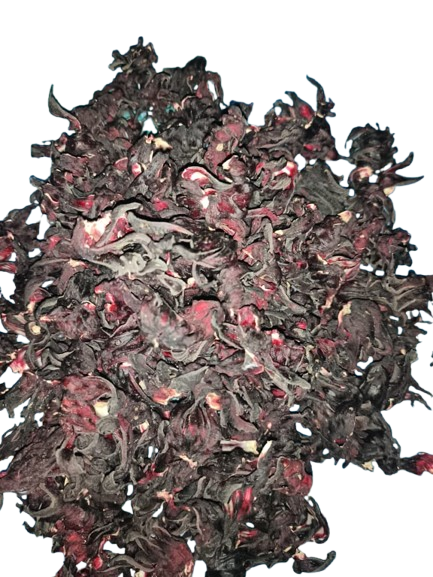
Known scientifically as Hibiscus sabdariffa, the dried calyx has a distinctive deep-red appearance and a naturally tart character that gives it a recognizable place in food and beverage preparation. But its potential does not end with traditional uses.
Today, hibiscus can also be viewed as a creative ingredient—one that gives product developers, chefs, beverage makers, and food entrepreneurs new possibilities to explore.
An Ingredient With a Strong Identity
Many agricultural ingredients require additional interpretation before consumers recognize them.
Hibiscus is different.
Its color, aroma, and tart profile give it an immediate identity. This makes it interesting for creators looking for ingredients that can contribute character to a finished product.
Rather than simply being an agricultural raw material, dried hibiscus can become part of a product’s visual and sensory concept.
That distinction opens the door to experimentation.
Beyond the Familiar Cup
Hibiscus is often associated with beverages, but creative food development can take the ingredient in many directions.
Depending on formulation and processing methods, it can be explored in:
- Herbal and botanical beverages
- Syrups and concentrates
- Infused drinks
- Desserts
- Sauces and reductions
- Jams and fruit preparations
- Confectionery concepts
- Culinary garnishes
- Blended botanical products
The important idea is not that every application will suit every hibiscus material.
Instead, the ingredient provides a foundation from which different formulations can be developed.
Color Can Become Part of the Product Experience
Food is experienced visually before it is tasted.
The naturally deep color associated with hibiscus can therefore become part of a product’s presentation. For product developers, this creates an opportunity to think about hibiscus not only in terms of flavor, but also in terms of appearance.
A beverage can use its color to establish a visual identity.
A dessert can incorporate hibiscus into its presentation.
A culinary creation can use a hibiscus-based preparation as a contrasting element.
In this way, an agricultural ingredient becomes part of the design of the final product.
Creativity Requires Control
Innovation does not mean using an ingredient without limits.
Successful formulation requires understanding how an ingredient behaves.
With dried hibiscus, developers may need to consider factors such as particle size, extraction method, concentration, acidity, color intensity, moisture, and interaction with other ingredients.
This is where creativity meets technical knowledge.
The goal is not simply to add hibiscus to a recipe. The goal is to understand what hibiscus contributes and then use those characteristics deliberately.
From Ingredient to Product Concept
A major opportunity lies in moving one step beyond selling raw ingredients.
Entrepreneurs can explore how hibiscus can become part of a complete product concept.
For example, instead of thinking only about dried hibiscus as a bulk agricultural commodity, a business could investigate consumer-ready formats, carefully formulated beverages, culinary products, or specialty botanical preparations.
This creates another level of value.
The raw material becomes the starting point for innovation rather than the final destination.
The Role of Experimentation
Not every new idea needs to become a large commercial product immediately.
Small-scale experimentation can reveal how hibiscus behaves in different formulations.
A food entrepreneur might compare different extraction methods. A beverage developer might test different concentrations. A chef might explore combinations with fruits, spices, herbs, or sweeteners.
Each experiment can produce useful knowledge.
Over time, these small discoveries can lead to distinctive recipes and commercially relevant products.
A New Generation of Hibiscus Entrepreneurs
The future of hibiscus is not limited to farmers and commodity traders.
It can also include chefs, beverage developers, food technologists, packaging designers, retailers, and young entrepreneurs who see possibilities in transforming familiar agricultural ingredients.
This creates a broader creative ecosystem around the crop.
The most interesting opportunity may therefore be found not only in producing hibiscus, but in asking a different question:
What can be created from it?
The Ingredient of Possibility
Dried hibiscus has already traveled far from the fields where it is cultivated. But its next journey may be even more interesting.
It can move from a raw agricultural product into a formulation, from a formulation into a product, and from a product into a new consumer experience.
That transformation begins with imagination but it succeeds through careful experimentation, technical understanding, and consistent execution.
Hibiscus sabdariffa may begin as a dried flower, but it does not have to remain simply a dried flower.
Sometimes, the future of an ingredient begins when someone looks at it and sees a possibility rather than a product.