
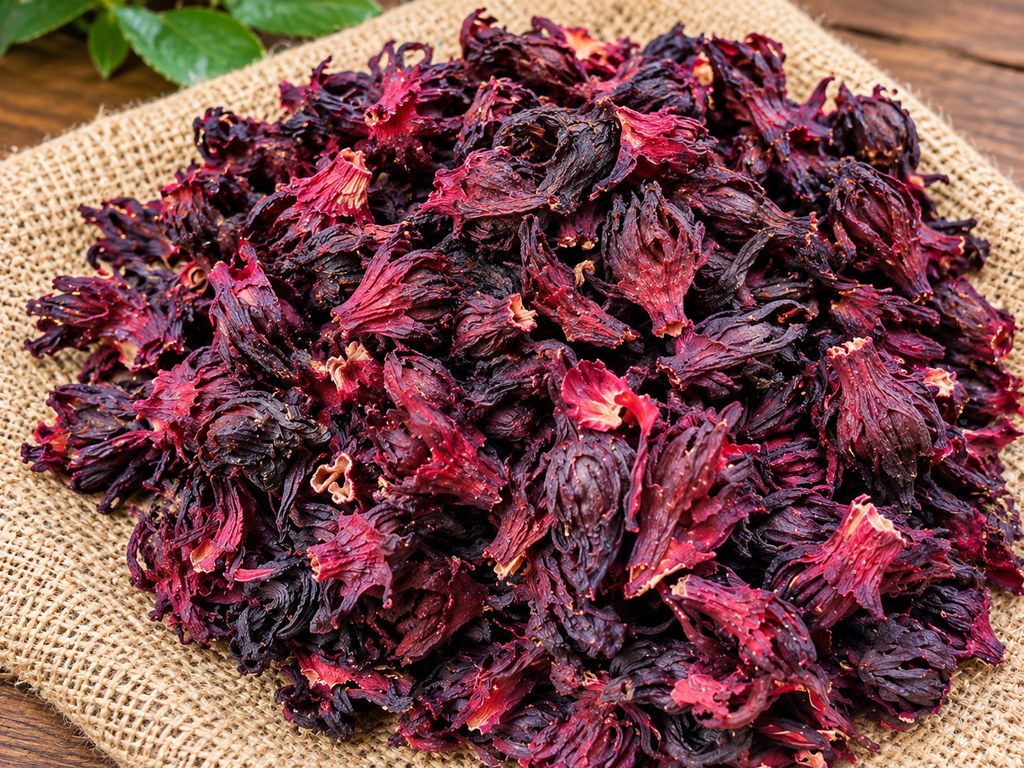
A hibiscus field may look quiet from a distance, but behind every dried calyx is a chain of decisions when to cultivate, how to harvest, how to dry, how to store, and how to prepare the product for a demanding market.
For Hibiscus sabdariffa, the future is no longer only about producing more. It is about producing more intelligently.
As international interest in botanical ingredients continues to evolve, growers, processors, traders, and manufacturers have an opportunity to rethink how dried hibiscus moves from agricultural fields into global markets.
From Traditional Farming to Smarter Decisions
Agriculture has always depended on experience. Farmers understand their land, recognize seasonal patterns, and know how crops respond to changing conditions.
Today, technology can complement that knowledge.
Weather applications, digital farm records, mobile communication, satellite information, and online agricultural resources can help producers make better-informed decisions. These tools do not replace practical farming knowledge; they can strengthen it.
For hibiscus cultivation, better information can support decisions around planting periods, field management, harvesting, and post-harvest handling.
The result is a gradual shift from relying solely on experience toward combining experience with information.
The Importance of What Happens After Harvest
Harvesting is only one part of the journey.
Once hibiscus calyxes leave the field, careful handling becomes essential. Drying, cleaning, sorting, storage, and packaging can influence the consistency of the finished material.
This makes post-harvest skills just as important as cultivation skills.
A well-organized operation considers questions such as:
- How should harvested calyxes be handled?
- How can contamination be minimized?
- How can unwanted plant material be separated?
- How should dried hibiscus be stored?
- How can different grades or sizes be managed?
- How can product information be recorded accurately?
These details may appear small individually, but together they can make a significant difference to commercial readiness.
Digital Communication Is Changing Agricultural Trade
A producer no longer has to depend entirely on physical networks to discover potential customers.
Digital communication has made it possible for agricultural businesses to introduce their products to buyers across borders, exchange specifications, discuss quantities, share product information, and develop commercial relationships from thousands of kilometres away.
For dried hibiscus, this creates new possibilities for smaller agricultural enterprises.
A business with reliable information, professional presentation, clear specifications, and consistent communication can become visible to markets that were once difficult to reach.
The opportunity is not simply to sell a commodity online.
It is to present an agricultural product with clarity and professionalism.
Turning Agricultural Skills Into Enterprise
Hibiscus can also create opportunities beyond farming itself.
A growing ecosystem can involve:
- Seed and input suppliers
- Small-scale growers
- Harvesting teams
- Cleaning and sorting businesses
- Drying operations
- Packaging providers
- Quality-control services
- Export businesses
- Ingredient traders
- Food and beverage manufacturers
This creates room for entrepreneurship at different levels.
Someone may begin with cultivation. Another person may specialize in cleaning. Another may build a packaging business. Others may focus on commercial connections and international trade.
Agricultural value therefore does not have to remain concentrated at the farm level. It can encourage the development of supporting businesses around the crop.
Preparing Hibiscus for a More Selective Market
International buyers increasingly need more than a product name.
They may want information about botanical identity, physical characteristics, moisture, purity, packaging, origin, documentation, and other specifications relevant to their intended use.
This means successful agricultural trade increasingly depends on information as well as material.
A sack of dried hibiscus and a clearly documented, consistently handled shipment may contain the same botanical ingredient, but they do not necessarily offer the same commercial experience.
Professional preparation helps reduce uncertainty and makes communication between suppliers and buyers more efficient.
The Next Generation of Hibiscus Enterprise
The future of dried hibiscus will not be determined by cultivation alone.
It will also depend on education, technology, entrepreneurship, responsible processing, market understanding, and the ability to connect agricultural production with changing international requirements.
Young entrepreneurs can participate through digital marketing, product development, quality management, agricultural services, export coordination, and other areas surrounding the crop.
This creates an important possibility: hibiscus can become not merely something that is harvested, but a platform around which knowledge, skills, and businesses are developed.
Looking Further Ahead
The story of Hibiscus sabdariffa is entering a new stage.
The central question is gradually moving from “How much can we produce?” to “How effectively can we produce, prepare, communicate, and develop it?”
That change matters.
The strongest future for dried hibiscus may belong to businesses and agricultural communities that combine traditional knowledge with modern tools, careful post-harvest practices, reliable information, and entrepreneurial thinking.
The flower begins in the field, but its possibilities extend far beyond it.
The future of hibiscus will not simply be harvested. It will be built.