
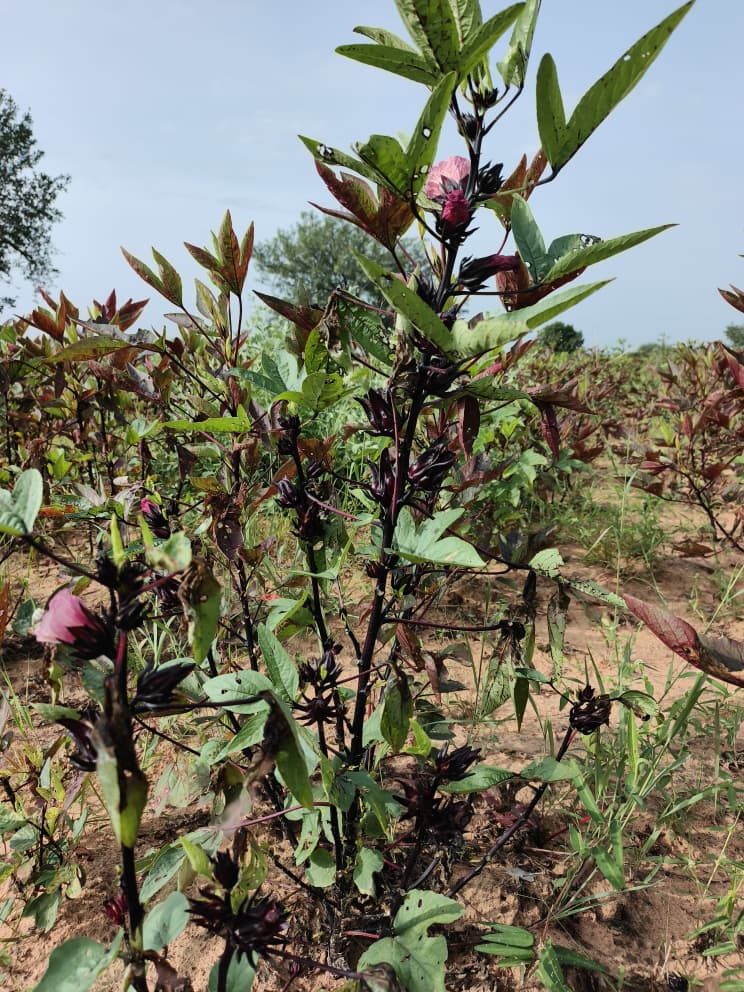
- Harvesting Is More Than Picking the Crop
- Maturity Influences the Raw Material
- Weather Can Affect Harvest Operations
- The Period Immediately After Harvest Matters
- Drying Begins With the Right Preparation
- Color and Appearance Attract Attention
- Harvesting Also Affects Sorting
- Why Buyers Should Understand Agricultural Variation
- Harvest Records Support Better Traceability
- Harvest Timing and Long-Term Supply Planning
- The Buyer-Supplier Relationship Starts Earlier Than the Purchase Order
- From Harvest to Export
- The First Step Toward a Good Dried Product
A successful hibiscus crop does not end when the plants are harvested. The timing of that harvest can influence the condition of the calyxes as they move into drying, sorting, and further processing.
For Hibiscus sabdariffa, harvesting is therefore an important transition between cultivation and the production of a commercial dried botanical ingredient.
Understanding this stage helps explain why agricultural handling can have a lasting effect on the material eventually purchased by international buyers.
Harvesting Is More Than Picking the Crop
The harvest represents a change in the life of the plant material.
Before harvest, the crop is influenced by growing conditions in the field. After harvest, the focus shifts toward protecting and processing the harvested calyxes.
This transition needs to be managed carefully because freshly harvested plant material is still affected by moisture and environmental conditions.
The objective is to move the crop into appropriate post-harvest handling without unnecessary delay or exposure.
Maturity Influences the Raw Material
Agricultural crops develop through different stages, and harvesting decisions are made with the condition of the crop in mind.
For hibiscus, the calyxes are the commercially important part of the dried product. Their physical development and condition at harvest can influence what happens during subsequent processing.
Harvesting too early or too late can therefore create different challenges for handling and preparation.
The appropriate harvesting stage depends on cultivation conditions and production practices rather than one universal calendar date.
Weather Can Affect Harvest Operations
Agriculture does not take place in a controlled factory environment.
Rain, humidity, temperature, and other environmental conditions can affect harvesting and post-harvest operations.
This makes practical planning important.
Harvesting under unsuitable conditions may increase moisture-related handling challenges, while appropriate timing can make the transition into drying more manageable.
For producers, understanding local seasonal conditions is therefore an important part of crop management.
The Period Immediately After Harvest Matters
Once hibiscus is harvested, the raw material needs to be handled appropriately.
The objective is to protect it from unnecessary contamination and unfavorable environmental exposure while preparing it for drying.
This stage can sometimes receive less attention than the actual drying process, but it forms an important link between field production and processing.
Good post-harvest organization begins immediately after the crop leaves the plant.
Drying Begins With the Right Preparation
Drying is one of the most important steps in producing dried hibiscus.
Its purpose is to reduce moisture to a level appropriate for storage and the intended application.
However, drying cannot be separated completely from harvesting.
The amount and condition of material entering the drying process can affect how efficiently it can be handled.
This is why harvesting, transportation, preparation, and drying should be considered as connected stages rather than independent activities.
Color and Appearance Attract Attention
Dried hibiscus is widely recognized for its characteristic red appearance.
Buyers often examine the visual condition of the dried calyxes when evaluating a shipment.
However, color should be viewed as one characteristic among several.
Appearance can provide useful information, but it does not replace specifications, inspection, or laboratory testing where such verification is required.
A professional purchasing process considers the whole product rather than relying on one visual feature.
Harvesting Also Affects Sorting
Once dried, hibiscus may be sorted according to the requirements of the intended market.
Sorting can help remove unwanted material and organize the product into a more consistent commercial form.
The effectiveness of this stage depends partly on the condition of the material entering processing.
Careful harvesting and handling can therefore make subsequent sorting more manageable.
Why Buyers Should Understand Agricultural Variation
International buyers sometimes expect agricultural products to behave like manufactured components.
Hibiscus is different.
Natural variations can occur between growing areas, harvests, and production lots. These differences do not automatically indicate a problem; they are part of working with an agricultural raw material.
The role of commercial specifications is to define acceptable characteristics for the intended application.
This provides a practical framework for purchasing without pretending that every agricultural batch is naturally identical.
Harvest Records Support Better Traceability
Recording harvest and receiving information can also strengthen traceability.
A supplier may maintain information about when material entered the processing operation, how it was handled, and which batch it became part of.
These records can later be connected to packaging and shipment information.
For repeat international business, this can make communication considerably easier.
Harvest Timing and Long-Term Supply Planning
Harvest timing also matters beyond one shipment.
Suppliers need to plan processing capacity, storage space, packaging materials, labor, and logistics around the agricultural cycle.
A large harvest arriving at once can create operational pressure if processing capacity is limited.
Good planning helps ensure that harvested material can move through the necessary stages in an organized manner.
The Buyer-Supplier Relationship Starts Earlier Than the Purchase Order
A buyer may only see the finished product, but its characteristics are influenced by decisions made much earlier.
Understanding this can improve communication between suppliers and buyers.
Instead of discussing only the final price and quantity, commercial conversations can also address product specifications, processing requirements, packaging, documentation, and expected delivery conditions.
This creates a more complete understanding of what is being purchased.
From Harvest to Export
The journey of Nigerian dried hibiscus illustrates how many stages exist between agricultural production and international trade.
The crop is cultivated, harvested, handled, dried, sorted, packed, stored, documented, and transported.
Each stage contributes something different.
Harvest timing is only one part of this journey, but it is an important starting point because everything that follows depends on the condition of the material entering the post-harvest process.
The First Step Toward a Good Dried Product
A finished sack of dried hibiscus may appear simple, but its characteristics can be influenced long before it reaches an export warehouse.
Harvesting at an appropriate stage, handling the crop carefully, moving it efficiently into drying, and maintaining clear production records all contribute to a more organized supply process.
For buyers of Hibiscus sabdariffa, understanding this agricultural foundation provides useful context when evaluating suppliers and product specifications.
The quality and usability of dried hibiscus are not created at the final stage. They begin with decisions made in the field and continue through every step that follows the harvest.