
- Agriculture Begins With Seasonality
- Preservation Bridges Two Worlds
- Drying Is a Transformation, Not Just Storage
- Preservation Supports Broader Planning
- Extending Access Beyond the Harvest
- Storage Becomes Part of Product Stewardship
- Preservation Creates Commercial Continuity
- The Wider Meaning of Preservation
- Conclusion
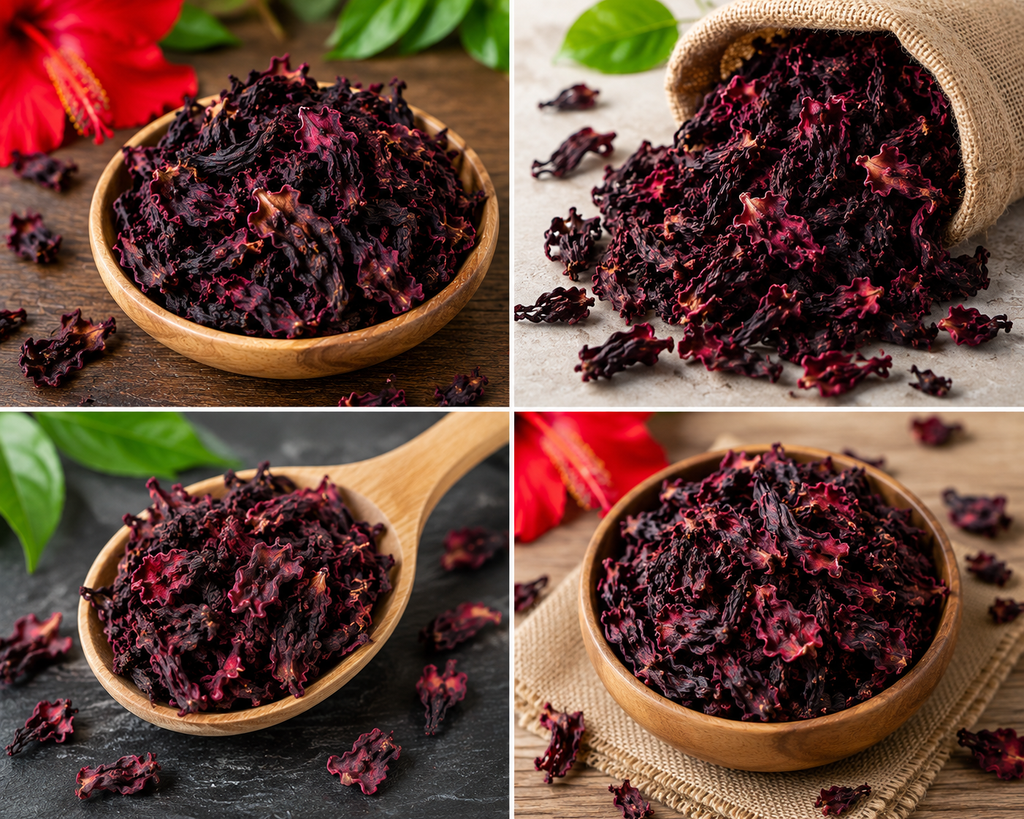
Agriculture follows nature’s calendar, but modern food systems operate throughout the year. This difference creates an important challenge: how can a seasonal agricultural resource remain useful beyond the period in which it is harvested? Preservation provides the answer. Through appropriate post-harvest handling and drying, hibiscus calyces can be transformed into a stable botanical ingredient with applications that extend far beyond the harvest season. Known scientifically as Hibiscus sabdariffa, dried hibiscus flower demonstrates how preservation can expand the practical and commercial life of an agricultural product.
Drying does more than preserve a crop it extends its possibilities.
Agriculture Begins With Seasonality
Hibiscus, like other crops, develops according to natural environmental conditions.
Its agricultural cycle is influenced by:
- Rainfall
- Temperature
- Sunlight
- Soil conditions
- Harvest timing
These natural factors determine when the crop is ready for collection.
Preservation Bridges Two Worlds
Fresh agricultural products can be highly dependent on timing. Preservation creates a bridge between the harvest period and later use.
For hibiscus, drying changes the material into a form that can be more conveniently:
- Stored
- Handled
- Transported
- Prepared
- Processed
This transformation helps separate consumption from the limitations of the growing season.
Drying Is a Transformation, Not Just Storage
The drying process fundamentally changes the physical condition of the plant material.
Moisture is reduced, creating a dried botanical product that can be maintained under appropriate storage conditions and prepared for later applications.
The result is a practical ingredient rather than simply a recently harvested crop.
Preservation Supports Broader Planning
When agricultural products can be preserved appropriately, businesses and manufacturers gain greater flexibility in planning their activities.
This can support:
- Ingredient availability
- Production scheduling
- Inventory planning
- Product formulation
- Commercial distribution
Preservation therefore contributes to more organized agricultural value chains.
Extending Access Beyond the Harvest
A successful preservation process allows an agricultural ingredient to travel through time as well as geography.
Instead of being restricted to immediate local use, dried hibiscus can become available for applications after the original harvest period and in markets far from where it was cultivated.
This dramatically expands the practical reach of the crop.
Storage Becomes Part of Product Stewardship
Preservation does not end when drying is completed.
Appropriate storage remains important for maintaining the condition of the dried material. Protection from unsuitable environmental conditions helps preserve its usability until it reaches its intended application.
Good storage therefore forms part of the complete post-harvest process.
Preservation Creates Commercial Continuity
Year-round availability can help connect seasonal agriculture with industries that operate continuously.
Dried hibiscus can therefore participate in activities such as:
- Beverage manufacturing
- Herbal infusion production
- Food preparation
- Ingredient processing
- International distribution
The crop’s seasonal origin does not have to restrict its commercial life.
The Wider Meaning of Preservation
Preservation represents one of agriculture’s most important transformations. It allows people to maintain useful resources beyond their natural production periods, helping connect farmers, processors, manufacturers, and consumers across time.
For hibiscus, this transformation has helped turn a seasonal botanical crop into an ingredient capable of participating in a global marketplace.
Conclusion
Dried hibiscus flower illustrates how preservation can fundamentally increase the usefulness of an agricultural resource. Through careful drying, storage, and post-harvest management, Hibiscus sabdariffa can move beyond the limitations of seasonality and become a practical ingredient for year-round applications. Preservation therefore represents not merely a method of extending shelf life, but a pathway for extending opportunity.