
- Start With the Intended Use
- Examine the Physical Appearance
- Check the Cleanliness
- Consider Moisture
- Look at the Calyx Structure
- Assess the Aroma and General Condition
- Why Sampling Matters
- Compare the Sample With the Commercial Shipment
- Packaging Should Match the Shipment
- Documentation and Commercial Details
- Evaluating a Nigerian Hibiscus Supplier
- Quality Should Be Defined Before Price
- Preparing for a Long-Term Supply Relationship
- A Practical Approach to Bulk Hibiscus Sourcing
- Conclusion
A good dried hibiscus product is not defined by one feature. For a business preparing to purchase several hundred kilograms or multiple tonnes, the evaluation process can involve appearance, moisture, cleanliness, physical condition, packaging, documentation, and consistency.
For companies sourcing Hibiscus sabdariffa internationally, understanding these factors can make communication with suppliers more precise and help ensure that the selected raw material fits the intended application.
Start With the Intended Use
The first question for a buyer should be simple: What will the hibiscus be used for?
A tea producer, beverage manufacturer, ingredient wholesaler, and food processor may have different requirements.
For example, a business selling whole-leaf herbal infusions may prefer intact calyxes, while a manufacturer using hibiscus in a blending or processing operation may request cut material.
Defining the final application first makes it easier to establish an appropriate product specification.
Examine the Physical Appearance
Visual inspection is often the first stage of evaluating dried hibiscus.
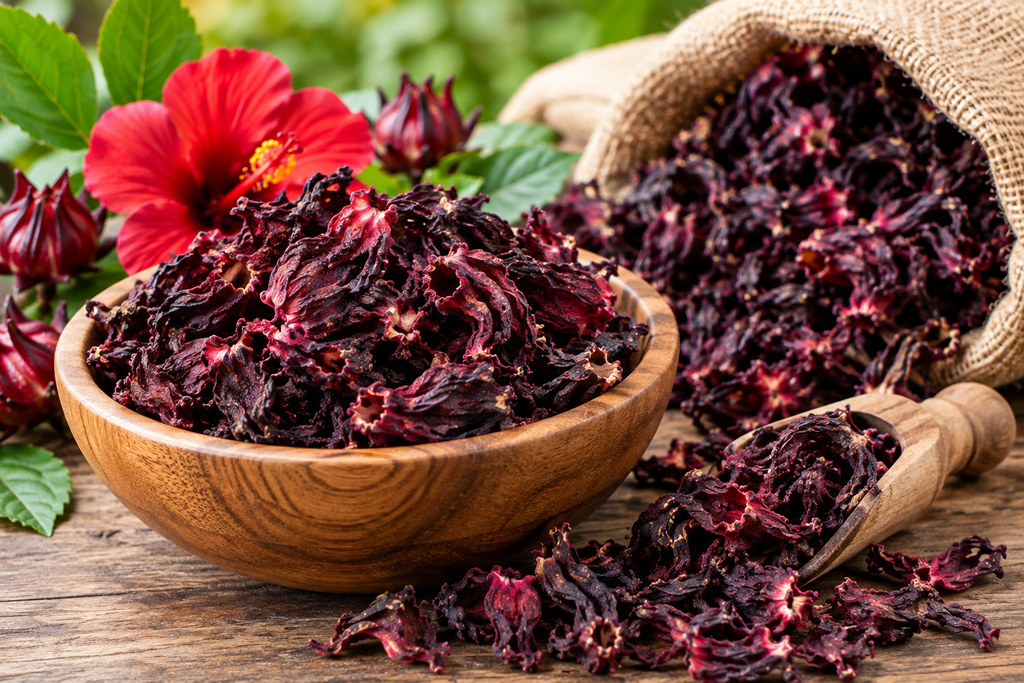
Buyers can look at the overall appearance of the calyxes, including their color, size, shape, dryness, and physical condition.
A natural red to deep-red appearance is commonly associated with dried hibiscus, although appearance can vary according to agricultural and processing factors.
Visual inspection is useful, but it should be considered alongside other quality checks rather than used as the only assessment.
Check the Cleanliness
Dried agricultural products need to be properly sorted and cleaned before commercial shipment.
Buyers may inspect a sample for unwanted plant material, soil, stones, insects, packaging debris, or other foreign matter.
The acceptable level depends on the agreed specification and destination requirements.
For manufacturers, cleanliness is particularly important because the raw material eventually becomes part of another production process.
Consider Moisture
Moisture is an important consideration when evaluating dried hibiscus.
If a dried product is exposed to excessive moisture during processing, storage, or transportation, its condition can change.
For this reason, buyers and suppliers commonly establish an agreed moisture specification before a bulk order is finalized.
Laboratory testing can provide a more reliable measurement than visual inspection alone.
Look at the Calyx Structure
The physical structure of the dried calyx can provide additional information about the product.
Some buyers may prefer large, relatively intact calyxes for applications where appearance matters. Others may have no requirement for whole material because their manufacturing process involves cutting or grinding.
The desired structure should therefore be connected to the final use rather than treated as a universal quality rule.
Assess the Aroma and General Condition
A sample can also be examined for its general sensory condition.
The material should be assessed for unusual odors or signs that may indicate unsuitable storage or handling. A normal botanical aroma can provide useful information during an initial inspection.
Sensory examination should complement, rather than replace, appropriate laboratory or technical testing when required.
Why Sampling Matters
Samples allow buyers to evaluate a product before committing to a larger commercial quantity.
A sample can be used to assess physical characteristics and, where appropriate, sent for independent laboratory analysis.
For a new supplier relationship, agreeing on a representative sample before a bulk shipment can help establish a shared understanding of the product.
Compare the Sample With the Commercial Shipment
One important consideration in international sourcing is consistency.
A buyer may approve a sample and later receive a commercial shipment. The supplier should aim to ensure that the bulk product corresponds with the characteristics agreed during the purchasing process.
This is why clear specifications and documented agreements are useful for both parties.
Packaging Should Match the Shipment
The product specification is only one part of bulk purchasing. Packaging also matters.
The buyer should clarify the preferred package size, material, inner protection where required, labeling, and loading arrangement.
Suitable packaging can help protect dried hibiscus during transportation and subsequent storage.
For large international orders, packaging requirements should be agreed before production or preparation begins.
Documentation and Commercial Details
A professional bulk purchase involves more than inspecting the product.
Depending on the destination and transaction, buyers may need commercial and export documents associated with the shipment.
The buyer and supplier should agree beforehand on which documents are required, who will provide them, and when they will be made available.
Clear documentation can make customs clearance and receiving procedures more straightforward.
Evaluating a Nigerian Hibiscus Supplier
Nigeria is an important agricultural source of dried hibiscus. International buyers considering Nigerian suppliers can evaluate several practical factors.
These may include:
- Available supply volume
- Product specifications
- Processing and sorting practices
- Sample availability
- Packaging options
- Export experience
- Documentation
- Shipment arrangements
- Communication and response time
The purpose is not simply to find available stock, but to establish whether the supplier can meet the requirements of the intended transaction.
Quality Should Be Defined Before Price
Price is naturally important in international commodity purchasing, but it should be considered alongside product specifications.
A lower quotation may not represent the same product if grade, moisture, cleanliness, form, packaging, or documentation requirements differ.
A clearer approach is to define the product first and then compare quotations based on the same commercial specification.
Preparing for a Long-Term Supply Relationship
Businesses that use hibiscus continuously may eventually need regular deliveries rather than one isolated purchase.
In that situation, consistency becomes particularly important. Buyers can establish specifications and quality procedures that apply to future shipments, creating a common reference for both sides.
This can make repeat purchasing more predictable.
A Practical Approach to Bulk Hibiscus Sourcing
A straightforward evaluation process can follow this sequence:
1. Define the application.
Determine how the hibiscus will be used.
2. Establish specifications.
Agree on form, grade, moisture, cleanliness, and other relevant parameters.
3. Request a sample.
Inspect the physical product before placing a major order.
4. Test when necessary.
Use appropriate laboratory analysis for technical requirements.
5. Confirm packaging.
Agree on package size and protection.
6. Clarify commercial terms.
Confirm quantity, price, Intercom, destination, and shipment schedule.
7. Confirm documentation.
Establish the documents required for the transaction.
This process creates a clearer path from initial inquiry to commercial shipment.
Conclusion
Evaluating dried hibiscus before a bulk purchase is ultimately about matching the raw material with the buyer’s exact requirements.
Appearance, cleanliness, moisture, physical condition, packaging, documentation, and consistency can all contribute to a successful transaction. For international buyers sourcing Hibiscus sabdariffa from Nigeria, a clear specification and appropriate sampling process can provide a practical foundation for commercial cooperation.
The best sourcing decisions begin with understanding exactly what is being purchased and defining those expectations before the shipment is prepared.