
- From Field Crop to Commercial Ingredient
- Why the Calyx Matters
- Nigeria's Role in Hibiscus Supply
- Quality Starts Before Export
- Different Buyers, Different Requirements
- Packaging for International Shipment
- Storage After Processing
- Why Consistency Matters to Importers
- The Future of Dried Hibiscus Trade
- Final Thoughts
Across agricultural markets, some crops attract attention because they are both versatile and naturally distinctive. Hibiscus sabdariffa is one of them. Recognized by its deep-red calyxes and tart character, dried hibiscus has developed a place in tea, beverage, food, and botanical ingredient markets around the world.
Its journey from cultivation to international trade involves several important stages, and understanding these stages helps explain why buyers pay close attention to the quality and handling of dried hibiscus.
From Field Crop to Commercial Ingredient
Hibiscus begins as a cultivated agricultural crop, but its value does not end at harvest. Once the calyxes are collected, they need to be separated, dried, sorted, and protected from contamination and excess moisture.
Good post-harvest handling is particularly important because the condition of the dried material determines how suitable it will be for different commercial applications.
For exporters, the objective is not simply to move a product from one country to another. It is to preserve its expected characteristics throughout the supply chain.
Why the Calyx Matters
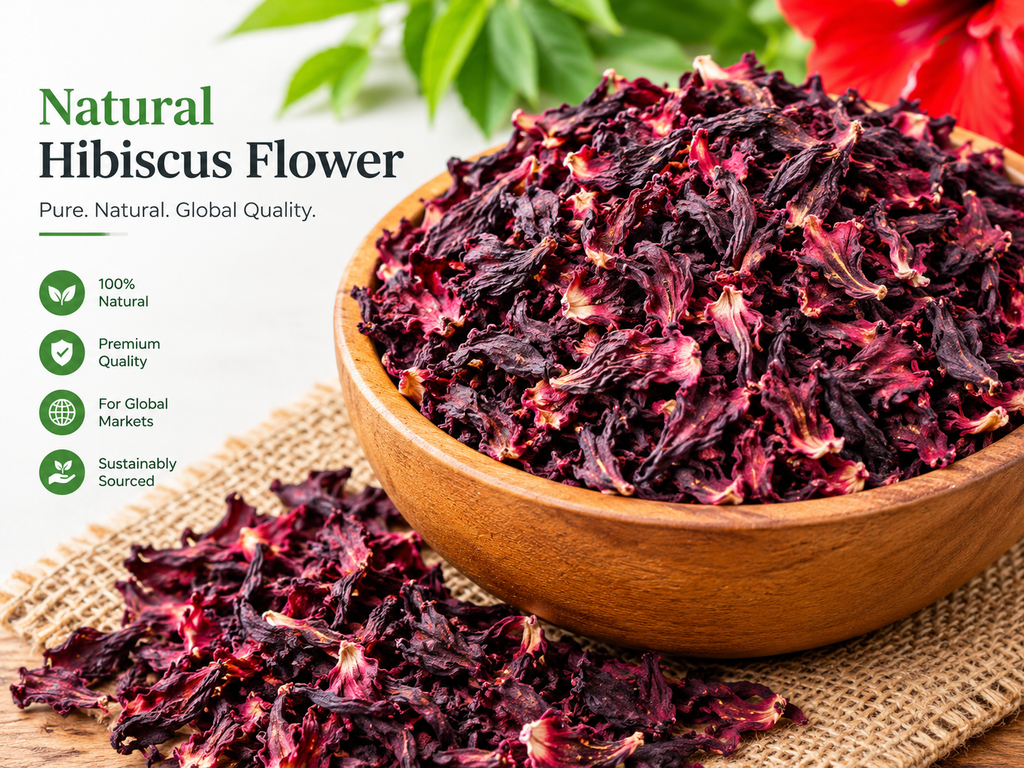
The colorful calyx is the main part of Hibiscus sabdariffa commonly traded as dried hibiscus. Its appearance, size, cleanliness, and condition are among the first characteristics buyers can assess.
The natural red color is also one of the reasons hibiscus attracts attention in beverage and botanical markets. When prepared as an infusion, dried calyxes contribute a distinctive color and tart flavor.
These characteristics make the raw material useful for companies developing teas, herbal drinks, concentrates, blends, and other products.
Nigeria’s Role in Hibiscus Supply
Nigeria has an established agricultural base for hibiscus production and participates in the international trade of dried hibiscus.
The supply chain can involve smallholder farmers, local collectors, processors, warehouses, exporters, freight companies, and overseas importers. Each stage can affect the final condition of the product.
For this reason, professional handling becomes important from the point of collection through final shipment.
Quality Starts Before Export
Export quality cannot be created at the port. It begins with appropriate agricultural and post-harvest practices.
After harvesting, dried hibiscus needs to be inspected and sorted to remove unwanted materials. Proper drying helps reduce excess moisture, while suitable storage protects the product from environmental conditions that could affect its quality.
Before shipment, exporters and buyers may agree on specifications covering factors such as:
- Moisture content
- Foreign matter
- Product cleanliness
- Calyx size
- Natural color
- Packaging requirements
- Microbiological parameters
- Intended application
The exact specification depends on the buyer and destination market.
Different Buyers, Different Requirements
Not every hibiscus buyer is looking for exactly the same product.
A tea company may prioritize whole calyxes and appearance. A beverage manufacturer may focus on color, flavor, consistency, and processing characteristics. A wholesaler may be more concerned with packaging, shipment size, and reliable supply.
This means that successful international suppliers need to understand the intended use before preparing a commercial shipment.
Clear communication about grade, quantity, packaging, specifications, delivery terms, and documentation can reduce misunderstandings between exporters and importers.
Packaging for International Shipment
Dried hibiscus needs packaging that can protect it during transportation and storage. The choice of packaging depends on the volume, destination, handling conditions, and buyer’s requirements.
For bulk shipments, exporters commonly use strong sacks or other suitable food-grade packaging. Inner liners may also be used where appropriate to provide additional protection.
Correct labeling and packing documentation are equally important when preparing an international shipment.
Storage After Processing
Even properly dried hibiscus can be affected by poor storage conditions. Warehouses should be clean, dry, ventilated, and suitable for agricultural products.
Exposure to excessive humidity can negatively affect dried products, while poor hygiene can create unnecessary quality risks.
Maintaining appropriate storage practices between processing and shipment therefore forms an important part of responsible hibiscus handling.
Why Consistency Matters to Importers
A single good shipment can attract a buyer, but consistent shipments are what can build a long-term commercial relationship.
Importers that use hibiscus as a production ingredient may need dependable quantities over an extended period. Significant differences in color, cleanliness, moisture, size, or general condition between shipments can create difficulties for manufacturers.
Reliable sourcing therefore depends on maintaining agreed specifications rather than treating every shipment as an isolated transaction.
The Future of Dried Hibiscus Trade
The international market for botanical ingredients continues to create opportunities for agricultural producers and exporters. Hibiscus fits naturally into this market because it can serve multiple industries while remaining a recognizable agricultural commodity.
For Nigerian suppliers, strengthening post-harvest handling, quality management, traceability, packaging, and export logistics can help improve access to international buyers.
The opportunity is not simply about exporting more hibiscus. It is about developing supply chains capable of delivering the right product, in the right condition, with clear specifications and dependable service.
Final Thoughts
Hibiscus sabdariffa has a straightforward agricultural origin but a surprisingly broad commercial journey. From Nigerian farms to international tea and beverage manufacturers, dried hibiscus passes through numerous stages before reaching its final application.
Quality handling, careful processing, appropriate storage, and reliable export practices can make a significant difference. As international interest in botanical ingredients continues, dried hibiscus remains an important product for agricultural suppliers seeking connections with global markets.