
- The Story Begins With Cultivation
- Harvesting Requires Care
- Turning Fresh Catalyses Into Dried Hibiscus
- Sorting Gives the Product Its Commercial Identity
- From Agricultural Product to Export Commodity
- Why Natural Color Matters
- Where Dried Hibiscus Goes After Export
- The Importance of Storage Between Stages
- What Makes an Export Shipment Reliable?
- Nigeria and the International Hibiscus Market
- A Product With Many Commercial Possibilities
- Looking Beyond the Shipment
- Conclusion
Before dried hibiscus reaches an overseas tea producer, beverage company, or ingredient distributor, it passes through a series of carefully connected stages. The quality seen by an international buyer is influenced long before the product is packed for export.
Hibiscus sabdariffa is widely recognized for its red calyxes, tart flavor, and versatility. In Nigeria, the crop forms part of an agricultural supply chain that connects growers and processors with customers in international markets.
Understanding this journey reveals what makes a dependable dried hibiscus supply possible.
The Story Begins With Cultivation
Like any agricultural commodity, hibiscus quality begins in the field.
Growing conditions, agricultural practices, harvesting decisions, and handling methods can all influence the characteristics of the harvested material. Once the calyxes reach the appropriate stage, harvesting begins the next part of the supply chain.
The crop then moves from agricultural production toward collection and post-harvest processing.
Harvesting Requires Care
The calyxes intended for commercial use need to be collected and handled carefully. Rough handling can affect their physical appearance, while unsuitable conditions after harvesting can create additional quality concerns.
After collection, the material is prepared for drying. This transition from fresh agricultural material to a stable dried product is one of the most important steps in the entire process.
Turning Fresh Catalyses Into Dried Hibiscus
Drying changes the physical condition of the harvested calyxes and prepares them for storage and further handling.
Proper drying aims to reduce moisture while maintaining desirable characteristics such as color and physical integrity. Once drying is complete, the product needs protection from moisture and contamination.
This is where careful post-harvest management becomes particularly important.
Sorting Gives the Product Its Commercial Identity
Not every harvested calyx will have identical characteristics. Sorting helps separate material according to the requirements of the intended market.
Depending on the buyer’s specification, attention may be given to:
- Calyx size
- Color
- Cleanliness
- Physical condition
- Foreign material
- Moisture
- General appearance
For exporters, sorting is more than a cosmetic step. It helps create a more consistent commercial product.
From Agricultural Product to Export Commodity
Once the dried hibiscus has been prepared, it enters a more structured commercial process.
The product may be stored, inspected, packaged, documented, and prepared for transportation. At this stage, communication between supplier and buyer becomes especially important.
An international buyer may have specific requirements for product form, quantity, packaging, quality parameters, documents, and delivery arrangements.
The supplier must understand these requirements before preparing the final shipment.
Why Natural Color Matters
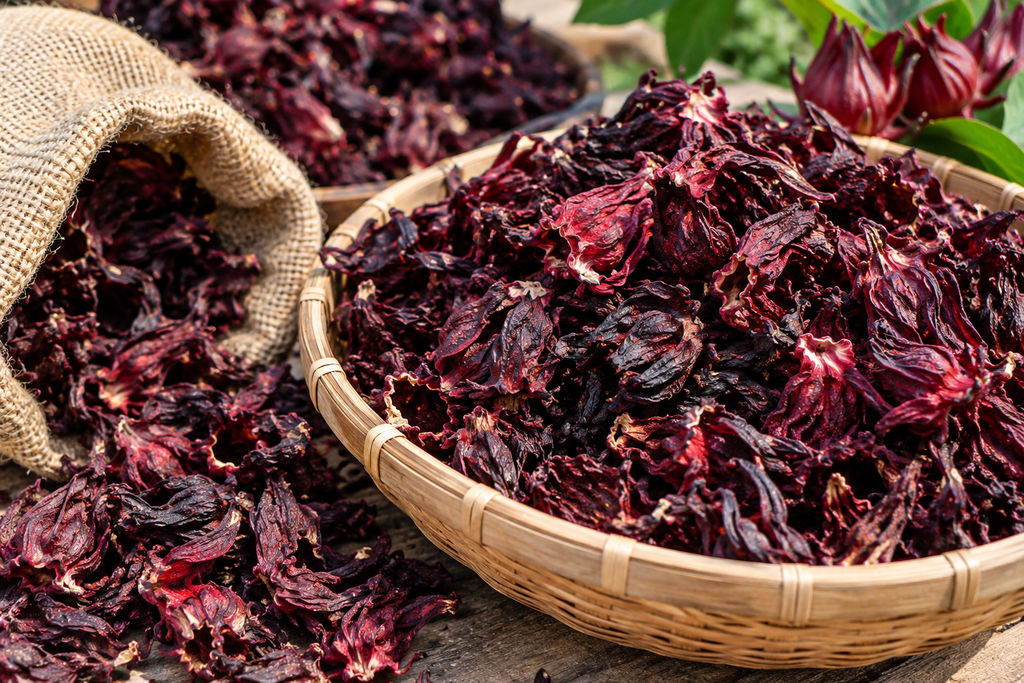
One of the most recognizable characteristics of dried hibiscus is its red coloration.
For many buyers, appearance provides an immediate indication of the material’s condition. However, color should not be considered in isolation. A proper assessment may also involve moisture, cleanliness, foreign matter, physical condition, and other agreed specifications.
This is particularly relevant for businesses using hibiscus as a raw material in products where appearance and consistency matter.
Where Dried Hibiscus Goes After Export
The international journey of hibiscus can lead to several different industries.
Tea manufacturers may use the dried calyxes in herbal infusions. Beverage companies can incorporate hibiscus into botanical drinks and blends. Ingredient distributors may supply the material to smaller manufacturers or retailers.
The same agricultural product can therefore serve very different commercial purposes depending on how it is processed and formulated.
The Importance of Storage Between Stages
A well-dried product can still be affected by poor storage.
Hibiscus should be kept in suitable conditions that protect it from excessive humidity, contamination, pests, and other environmental factors. Clean storage facilities and appropriate packaging help maintain the product between processing and shipment.
For exporters handling bulk quantities, warehouse management becomes an important part of maintaining consistency.
What Makes an Export Shipment Reliable?
Reliability comes from coordination.
Farmers need to supply suitable raw material. Processors need to handle it properly. Exporters need to organize quality checks, packaging, documentation, and logistics. Buyers need to communicate their specifications clearly.
When these parts work together, the result is a supply chain capable of serving international requirements more effectively.
Nigeria and the International Hibiscus Market
Nigeria’s agricultural sector provides a foundation for supplying dried hibiscus to overseas markets. The country’s production base creates opportunities for businesses involved in sourcing, processing, and exporting Hibiscus sabdariffa.
Expanding this opportunity depends on more than production volume. Quality management, responsible post-harvest handling, appropriate storage, reliable packaging, and efficient export coordination are equally important.
These factors can help strengthen connections between Nigerian suppliers and international buyers.
A Product With Many Commercial Possibilities
The versatility of hibiscus is one reason it continues to attract attention from businesses working with botanical ingredients.
Its use in teas and beverages is well established, while its distinctive characteristics allow it to fit into different product concepts and formulations.
For suppliers, this diversity creates opportunities to serve different customer groups. For buyers, it provides access to a botanical ingredient that can be adapted to multiple applications.
Looking Beyond the Shipment
A container of dried hibiscus represents much more than a quantity of agricultural material. It represents cultivation, harvesting, drying, sorting, storage, packaging, documentation, transportation, and commercial coordination.
Every stage can influence the final result.
For this reason, international hibiscus trade is strongest when suppliers and buyers focus not only on individual transactions but also on building dependable systems for repeated supply.
Conclusion
The journey of Hibiscus sabdariffa from Nigeria to international markets begins in agriculture but extends far beyond the farm. Harvesting, drying, sorting, storage, packaging, quality management, and logistics all contribute to the final product received by an overseas buyer.
As demand for botanical ingredients continues to create opportunities in global markets, careful supply-chain management will remain central to the success of Nigerian dried hibiscus.
From the first harvested calyx to the finished shipment, quality is built one stage at a time.