
- Know the Product You Are Buying
- Start With a Clear Specification
- Why Samples Can Be Useful
- Understanding Nigerian Hibiscus Supply
- Drying Is a Critical Stage
- Packaging for Bulk Shipments
- Choosing the Right Supplier
- Hibiscus for Tea and Beverage Manufacturers
- International Shipping Considerations
- Building a Long-Term Supply Relationship
- The Opportunity for Nigerian Dried Hibiscus
- Conclusion
Sourcing dried hibiscus in large quantities requires more than finding a supplier with stock. Importers need to understand the product, quality requirements, packaging, shipment conditions, and documentation before moving from an initial inquiry to a commercial order.
For companies purchasing Hibiscus sabdariffa for tea, beverages, food production, or wholesale distribution, having clear requirements from the beginning can make international sourcing more efficient.
Know the Product You Are Buying
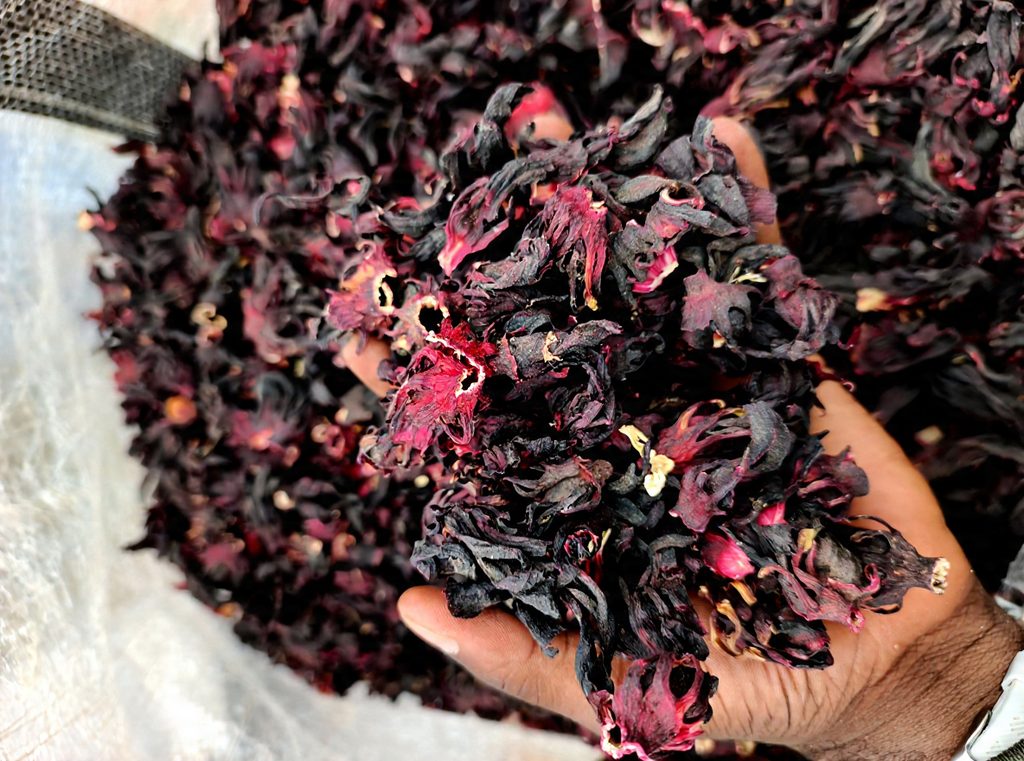
Commercially traded hibiscus is generally supplied as dried calyxes of Hibiscus sabdariffa. The dried material is valued for its characteristic red color and tart flavor and is used in a variety of botanical and food applications.
However, not every dried hibiscus shipment is identical. Differences can occur in calyx size, color, moisture, cleanliness, processing, and presentation.
Buyers should therefore avoid relying solely on the general term “dried hibiscus” when preparing a bulk purchase.
Start With a Clear Specification
A written product specification gives both sides a clear understanding of what is being purchased.
Depending on the application, a buyer may specify:
- Hibiscus sabdariffa as the botanical source
- Whole or cut calyxes
- Desired grade
- Natural color requirements
- Moisture specification
- Foreign matter limits
- Packaging format
- Required quantity
- Intended application
Having these details available can help suppliers provide a more accurate quotation and prepare a product that matches the buyer’s needs.
Why Samples Can Be Useful
For new supplier relationships, a sample can provide an opportunity to inspect the physical characteristics of the product before a larger purchase.
A buyer can examine factors such as appearance, size, cleanliness, aroma, and general condition. Depending on the intended use, the buyer may also conduct laboratory testing against the agreed specification.
Sampling does not replace proper commercial quality controls, but it can help establish a common reference between buyer and supplier.
Understanding Nigerian Hibiscus Supply
Nigeria is an established source of agricultural commodities, including dried hibiscus. The commercial supply chain may involve farmers, collectors, processors, exporters, logistics providers, and international importers.
The distance between production areas and overseas markets makes post-harvest handling especially important.
A supplier needs to coordinate collection, sorting, drying, storage, packaging, and shipment while maintaining the agreed product requirements.
Drying Is a Critical Stage
Fresh hibiscus calyxes contain moisture and therefore require appropriate drying after harvest.
The drying process needs to reduce moisture sufficiently for the product’s intended storage and handling conditions. After drying, the calyxes must be protected from renewed moisture exposure.
For international trade, this is particularly important because the product can remain in warehouses, containers, ports, and transportation networks for extended periods.
Packaging for Bulk Shipments
Bulk hibiscus needs packaging suitable for handling and transportation.
Depending on the buyer’s requirements, exporters may use sacks with appropriate inner protection or other food-suitable packaging formats. Packaging should help protect the product against moisture, contamination, and physical damage.
The quantity per package should also be agreed in advance so that the supplier can prepare the shipment according to the buyer’s handling and storage arrangements.
Choosing the Right Supplier
A supplier evaluation can cover several practical areas rather than focusing only on price.
Buyers may consider whether the supplier can provide:
Product consistency: Can the supplier maintain the agreed specifications?
Supply capacity: Can the required quantity be prepared within the requested timeframe?
Communication: Are specifications, quotations, and shipment details clearly communicated?
Documentation: Can the supplier provide the documents required for the transaction and destination?
Packaging: Can the product be packed according to the buyer’s requirements?
Export coordination: Does the supplier understand the practical requirements involved in international shipment?
These questions can help buyers establish whether a supplier is suitable for their particular sourcing needs.
Hibiscus for Tea and Beverage Manufacturers
Manufacturers using hibiscus as an ingredient often require reliable raw-material supply. Variations between batches can affect production processes and the characteristics of finished products.
For this reason, buyers may establish detailed specifications and quality procedures before beginning regular imports.
Whole dried calyxes may be suitable for some tea applications, while processed forms can be requested for other manufacturing processes.
International Shipping Considerations
A bulk hibiscus transaction involves more than the product itself. Buyers and suppliers should clarify the commercial terms, destination port, packaging, loading quantity, shipping schedule, and responsibilities of each party.
The chosen Intercom also determines which costs and responsibilities belong to the seller and buyer.
Clear shipping arrangements can reduce confusion and help both parties plan their logistics effectively.
Building a Long-Term Supply Relationship
A successful first shipment can become the foundation for regular business. Maintaining that relationship requires consistency on both sides.
Suppliers need to maintain product quality and communicate changes that could affect availability or pricing. Buyers should provide clear specifications, realistic forecasts, and timely decisions regarding orders and shipment arrangements.
Over time, this can create a more predictable supply chain for both parties.
The Opportunity for Nigerian Dried Hibiscus
Nigeria’s agricultural production provides opportunities for exporters to connect local growers and processors with international markets.
Developing stronger systems for quality control, storage, packaging, traceability, and export logistics can help suppliers meet the requirements of businesses purchasing dried hibiscus internationally.
For global buyers, Nigeria can serve as a sourcing market for Hibiscus sabdariffa when the supplier, specifications, and commercial requirements are properly aligned.
Conclusion
Buying dried hibiscus flower in bulk is a process that begins long before a container is shipped. Product specifications, sampling, quality control, drying, packaging, storage, documentation, and logistics all contribute to the success of an international order.
For importers seeking dried Hibiscus sabdariffa from Nigeria, understanding these factors can make supplier communication clearer and help establish stronger commercial relationships.
The most effective sourcing process is built around clear expectations, consistent quality, and reliable communication from the first inquiry through final delivery.