
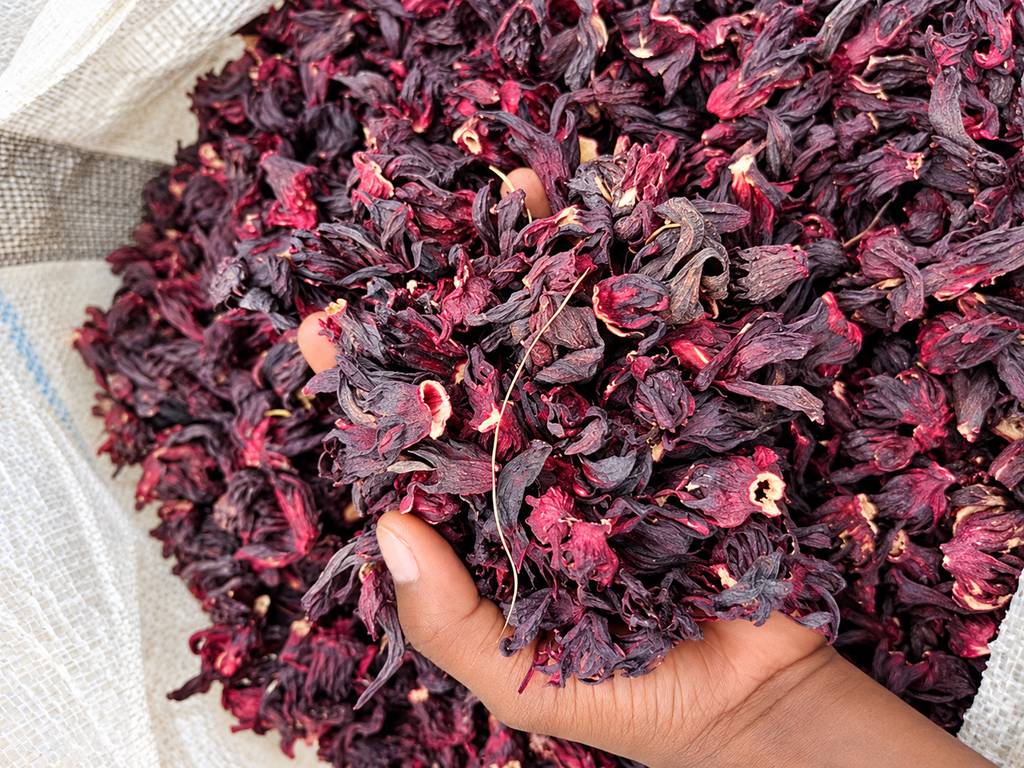
The hibiscus flower is becoming an increasingly recognized agricultural product in international markets, valued for its deep red color, distinctive tart flavor, and versatility in beverages and food applications. Among the varieties traded commercially, Hibiscus sabdariffa is especially important for dried calyxes used in teas, infusions, drinks, and food manufacturing.
Nigeria is one of the countries where hibiscus is cultivated and processed for commercial use. The dried flower moves from farming communities into local collection, sorting, drying, packaging, and eventually international supply chains.
What Is Hibiscus Flower?
Hibiscus flower commonly traded for food and beverage applications comes from Hibiscus sabdariffa, a plant belonging to the Malvaceae family. Although often called a flower in commercial markets, the dried material is primarily made from the plant’s colorful calyxes surrounding the seed capsule.
After harvesting, the calyxes are separated, carefully dried, cleaned, and prepared for storage or export. Their natural dark-red appearance makes hibiscus particularly recognizable among botanical ingredients.
Why Dried Hibiscus Is Important
Dried hibiscus has applications across several industries. It is widely used to prepare herbal infusions and refreshing beverages, while food manufacturers may use it as an ingredient where its natural color and characteristic acidity are desirable.
Its versatility also creates opportunities for different forms of trade. Depending on the buyer’s requirements, dried hibiscus may be supplied as whole calyxes, cut material, or processed grades.
For bulk buyers, factors such as cleanliness, moisture level, color, foreign matter, packaging, and consistency can have a major influence on the suitability of a shipment.
Nigerian Hibiscus in International Trade
Nigeria’s agricultural environment supports the production of hibiscus in several farming regions. Once harvested, the crop passes through a supply chain involving farmers, aggregators, processors, exporters, logistics providers, and international buyers.
The export process requires more than simply harvesting and drying the crop. Proper sorting and handling are important because international buyers typically need material that meets agreed specifications.
A reliable supply chain therefore begins at the farm and continues through post-harvest handling, storage, quality checks, packaging, and shipment.
What Buyers Look for in Dried Hibiscus
International buyers often evaluate dried hibiscus according to specific commercial and technical requirements. Common considerations include:
- Natural deep-red appearance
- Good cleanliness and sorting
- Appropriate moisture level
- Low foreign matter
- Suitable calyx size and condition
- Proper drying
- Food-grade handling and storage
- Appropriate export packaging
- Consistent quality between shipments
The exact requirements vary according to the destination market and intended application. Tea manufacturers, beverage companies, wholesalers, and ingredient importers may therefore request different specifications.
Hibiscus Flower for Tea and Beverage Production
One of the most established uses of dried hibiscus is herbal tea and beverage production. When steeped in hot water, the calyxes produce a naturally colorful infusion with a characteristic tart taste.
Hibiscus can be used alone or combined with other botanical, fruits, spices, or tea ingredients. This flexibility makes it useful for both traditional drinks and modern beverage formulations.
For manufacturers, the quality of the dried raw material can influence the appearance, aroma, flavor, and consistency of the finished product.
Proper Storage Matters
Dried agricultural products must be protected from moisture, contamination, pests, and unsuitable storage conditions. Hibiscus should therefore be kept in clean, dry, well-ventilated storage areas and protected from excessive humidity.
Appropriate packaging also helps maintain product condition during transportation and storage. For international shipments, packaging must be selected according to the buyer’s requirements, shipping method, and expected storage period.
Building a Reliable Hibiscus Supply Chain
The international hibiscus market depends on consistency. A buyer ordering one shipment may eventually require repeated deliveries, making dependable sourcing just as important as the quality of an individual batch.
For exporters, this means establishing reliable relationships with growers and collection networks, maintaining appropriate processing procedures, inspecting products before shipment, and communicating specifications clearly with buyers.
This approach can help create a more transparent supply chain from Nigerian producers to international markets.
The Growing Opportunity for Nigerian Hibiscus
As interest in botanical beverages and natural food ingredients continues to develop, dried hibiscus remains an agricultural product with strong potential for international trade.
Nigeria’s position as a source of hibiscus gives local processors and exporters an opportunity to connect agricultural production with global demand. Continued attention to quality control, responsible handling, suitable packaging, and dependable logistics can help strengthen this position.
For importers and manufacturers, Nigerian Hibiscus sabdariffa offers a commercially useful botanical ingredient with applications ranging from herbal infusions to beverage and food production.
Conclusion
Hibiscus flower is more than a colorful botanical product. Behind every export shipment is a supply chain that connects farmers, processors, exporters, and international buyers.
With proper harvesting, drying, sorting, storage, packaging, and quality management, Nigerian dried hibiscus can serve a wide range of global applications. As demand for botanical ingredients continues to evolve, Hibiscus sabdariffa remains an important product in the international agricultural trade.