
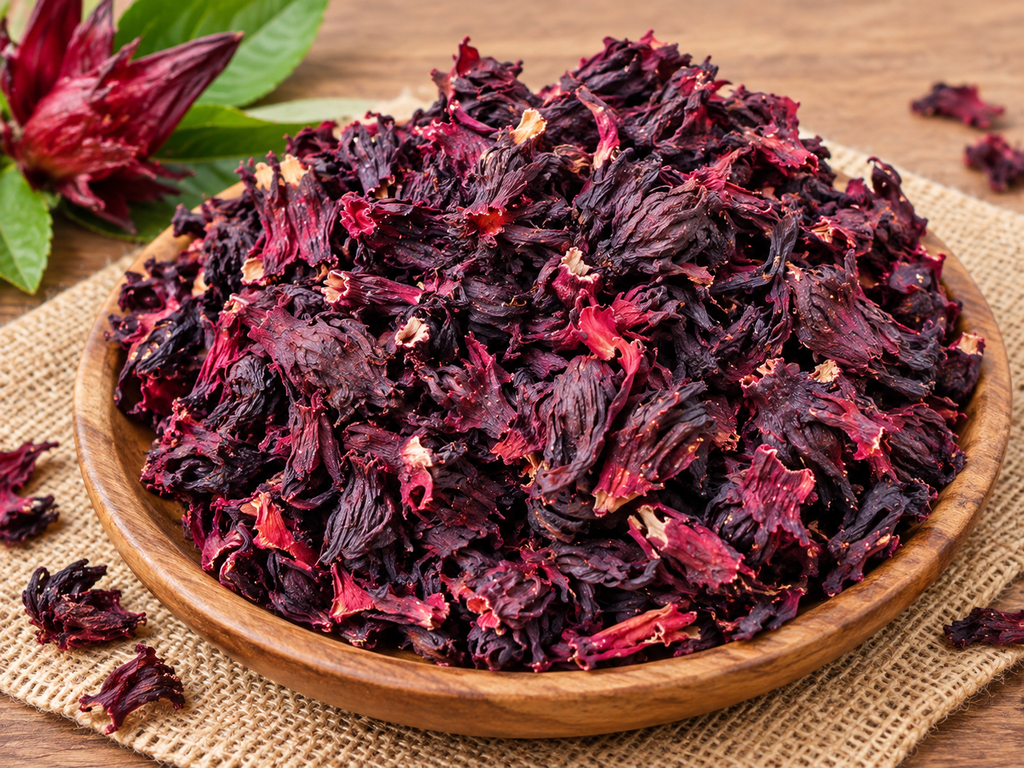
Before dried hibiscus flower reaches a tea factory, beverage manufacturer, or ingredient warehouse, it begins as a carefully cultivated agricultural crop. What appears to be a simple dried red calyx represents a chain of farming, harvesting, drying, sorting, storage, packaging, and international trade.
That journey has helped Hibiscus sabdariffa become one of the botanical products attracting attention in global markets.
More Than a Traditional Crop
Hibiscus has been used for generations in different parts of the world. Its naturally tart character makes it suitable for drinks and infusions, while its striking red appearance gives it a recognizable identity.
Today, the commercial conversation around hibiscus is increasingly connected to ingredient sourcing. Importers, tea companies, beverage producers, wholesalers, and processors need dependable supplies that meet defined specifications.
This has transformed dried hibiscus from a locally traded agricultural product into a commodity with international potential.
Where Quality Really Begins
The quality of dried hibiscus cannot be created at the packaging stage. It starts much earlier.
Growing conditions, harvesting practices, drying methods, and handling can all influence the final product. Once the calyxes are harvested, proper drying becomes particularly important because the product must be prepared for storage while maintaining its desired characteristics.
Sorting is another significant stage. Removing unwanted materials and separating the product according to commercial requirements can help create a more consistent shipment.
The Importance of the Calyx
In commercial hibiscus production, the calyx is the part that receives much of the attention.
When properly dried, whole calyxes can have a distinctive red appearance and a firm, dry texture. Depending on the buyer’s application, the material may be supplied whole or prepared in cut forms.
The preferred specification depends heavily on what happens after the shipment arrives. A tea blender, for example, may have different requirements from a manufacturer purchasing hibiscus for further processing.
Nigeria’s Place in the Supply Chain
Nigeria’s agricultural sector provides an important foundation for the production and export of dried hibiscus flower.
The country’s ability to connect agricultural production with international buyers creates opportunities throughout the supply chain. Farmers, aggregators, processors, exporters, logistics providers, and overseas manufacturers can all play a role in moving the product from origin to destination.
For exporters, the challenge is not simply finding buyers. Reliable international trade requires consistency between what is offered and what is delivered.
What Makes a Shipment Commercially Attractive?
A successful bulk hibiscus shipment involves several elements working together.
The buyer needs clear information about the product, including its form, specifications, quantity, packaging, and intended use. The supplier needs to understand the destination market and prepare the shipment accordingly.
Documentation is equally important. Depending on the destination and transaction, buyers may require certificates and shipping documents that support customs clearance and product verification.
Good communication throughout this process reduces uncertainty for both sides.
Hibiscus in the Modern Beverage Market
The versatility of hibiscus continues to create opportunities in beverages and botanical products.
Dried hibiscus can be used for herbal infusions, traditional drinks, beverage formulations, tea blends, and other applications where its distinctive flavor and appearance are desirable.
This flexibility is one reason the ingredient can appeal to different categories of buyers rather than being restricted to one industry.
Why Consistency Matters More Than a Single Shipment
International buyers looking for dried hibiscus are often thinking beyond their first purchase.
A sample may demonstrate what a supplier can provide today, but long-term purchasing depends on whether similar specifications can be maintained over subsequent shipments.
Consistent sourcing, proper storage, organized processing, accurate documentation, and dependable communication therefore become important commercial advantages.
For exporters, every shipment is an opportunity to demonstrate reliability.
The Road Ahead for Hibiscus
The future of the dried hibiscus trade will depend not only on production volumes but also on how professionally the supply chain develops.
As international buyers become more specific about quality, traceability, packaging, and documentation, suppliers who understand these requirements will be better positioned to build lasting relationships.
For Nigerian hibiscus exporters, this represents an opportunity to connect a locally produced agricultural commodity with international manufacturers and distributors seeking dependable botanical ingredients.
Final Perspective
The story of hibiscus flower is ultimately a story of transformation.
A red calyx harvested from an agricultural field can pass through several carefully managed stages before becoming an ingredient in a product thousands of kilometres away. Hibiscus sabdariffa therefore represents more than a familiar botanical it represents an expanding connection between agriculture, processing, international trade, and global demand.
The strongest hibiscus supply chains will be those built around quality at the source, careful handling, clear specifications, and trust between supplier and buyer.