
- Versatility Expands Economic Potential
- One Crop Can Support Different Industries
- Flexibility Encourages Product Development
- Diversification Can Strengthen Agricultural Value
- Consumer Curiosity Creates New Possibilities
- Versatility Does Not Mean Losing Identity
- Opportunities Beyond the Traditional Marketplace
- Building Value From Agricultural Diversity
- Conclusion
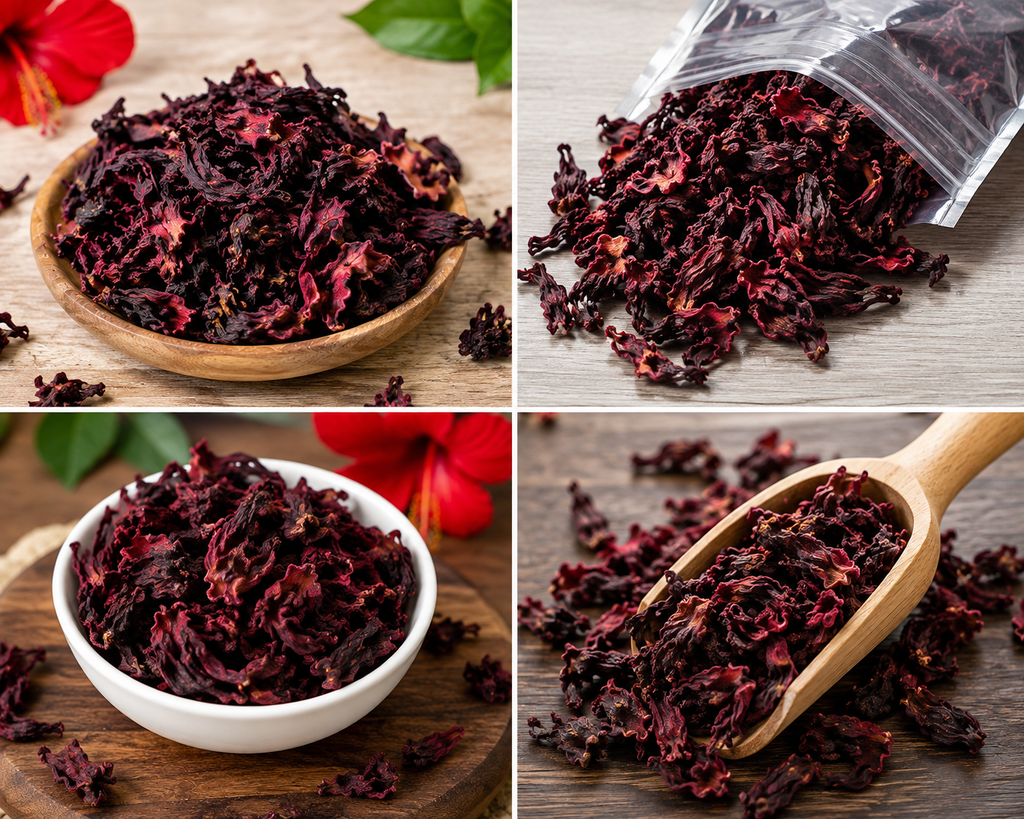
Some agricultural products are valuable because they serve a narrow and highly specialized purpose. Others become increasingly important because they can move across different industries and applications. Dried hibiscus flower belongs to the second category. Known scientifically as Hibiscus sabdariffa, it combines recognizable botanical characteristics with broad application potential, allowing it to participate in food, beverage, culinary, herbal, and ingredient markets.
Its greatest commercial strength may be its ability to serve different purposes without losing its identity.
Versatility Expands Economic Potential
When an agricultural ingredient can serve multiple applications, its commercial possibilities naturally become broader.
Dried hibiscus can be considered for:
- Herbal infusions
- Beverage formulations
- Food ingredients
- Culinary products
- Botanical blends
Each application represents a different opportunity for value creation.
One Crop Can Support Different Industries
The economic importance of versatility becomes clearer when a single agricultural product connects several sectors.
Hibiscus can create relationships between:
agriculture and food manufacturing,
farming and beverage production,
botanical ingredients and product development,
local cultivation and international commerce.
This interconnected demand can strengthen the wider agricultural ecosystem.
Flexibility Encourages Product Development
A versatile ingredient gives manufacturers room to experiment.
Developers can explore different combinations based on:
- Flavor objectives
- Visual presentation
- Product format
- Target consumers
- Intended application
This flexibility encourages creativity without requiring an entirely new raw material for every concept.
Diversification Can Strengthen Agricultural Value
Agricultural commodities become more economically interesting when their potential extends beyond one market.
A broader range of applications can encourage:
- New business opportunities
- Additional processing activities
- Greater commercial participation
- Development of specialized products
Diversification allows agricultural resources to generate value through multiple channels.
Consumer Curiosity Creates New Possibilities
Modern consumers are increasingly exposed to ingredients from different cultures and regions.
This creates opportunities for familiar botanical products to appear in new contexts.
Hibiscus can be introduced through:
- Contemporary beverages
- Specialty food products
- Modern tea blends
- Culinary experimentation
- Botanical concepts
Curiosity can turn an established ingredient into a source of new demand.
Versatility Does Not Mean Losing Identity
An ingredient can evolve across different applications while retaining the characteristics that make it recognizable.
For hibiscus, its distinctive:
- Red coloration
- Tart flavor
- Botanical character
- Traditional associations
provide a consistent identity across different product categories.
This combination of identity and flexibility is commercially valuable.
Opportunities Beyond the Traditional Marketplace
The future potential of dried hibiscus should not be limited to the applications already familiar today. As food science, beverage development, and consumer preferences continue to evolve, new uses may emerge.
The most interesting opportunities may come from applications that have not yet become mainstream.
Building Value From Agricultural Diversity
Versatility demonstrates that the economic importance of agriculture is not determined solely by how much of a product is produced. Its significance can also depend on how many useful directions that product can take.
Dried hibiscus illustrates this principle clearly: one botanical resource can support multiple forms of production, consumption, and commercial creativity.
Conclusion
Dried hibiscus flower demonstrates the economic power of versatility in modern agriculture. Its distinctive natural characteristics, cultural familiarity, and broad application potential allow Hibiscus sabdariffa to connect multiple industries and create opportunities across different markets. As global food and beverage culture continues to evolve, versatility may remain one of the strongest foundations for the long-term relevance of this remarkable botanical ingredient.