
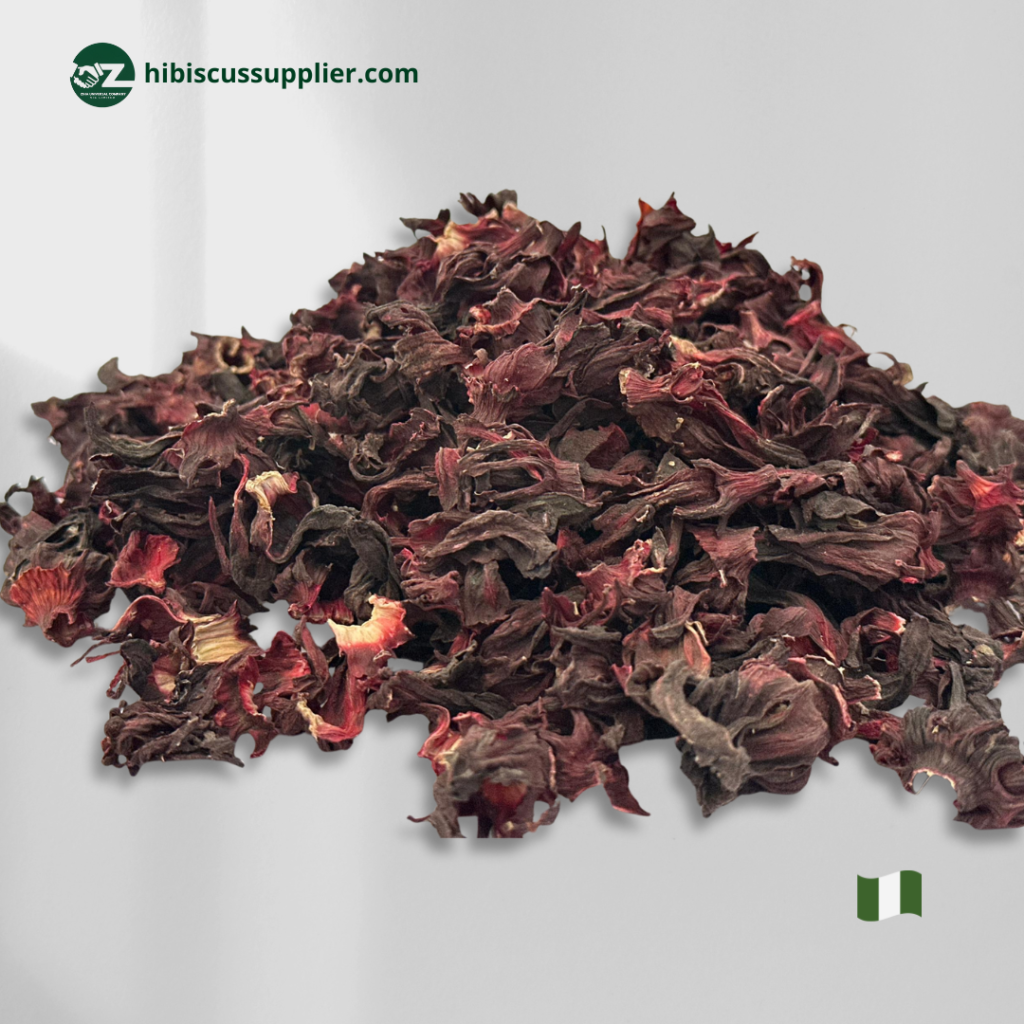
Hibiscus sabdariffa has become a prominent botanical commodity in international trade, valued for its natural qualities and wide commercial applications. Known for its deep red calyces and distinctive tart profile, hibiscus is no longer limited to traditional consumption. Today, it is an important raw material for global industries that prioritize natural sourcing, consistency, and long-term supply reliability.
The production of hibiscus begins in warm, suitable climates where the plant develops strong pigmentation and flavor. Farmers cultivate the crop using established agricultural practices, harvesting the calyces at full maturity to ensure optimal quality. After harvest, the calyces are carefully dried to reduce moisture content while preserving color, aroma, and structural integrity. This drying process is essential, as it gives hibiscus a long shelf life and allows it to be stored and transported safely over long distances.
Hibiscus sabdariffa is used across several key industries. In the beverage sector, it is widely used in herbal teas, infused waters, concentrates, and functional drinks. Its natural acidity enhances flavor balance, while its intense red color provides visual appeal without artificial additives. In food manufacturing, hibiscus is applied in sauces, syrups, jams, confectionery, and specialty foods, where it contributes both taste and natural coloring.
The wellness and herbal industry also relies heavily on hibiscus. It is commonly included in botanical blends and plant-based products that align with modern consumer preferences for natural and minimally processed ingredients. In the cosmetic and personal care sector, hibiscus extracts are used in skincare and haircare formulations that emphasize botanical content and clean-label positioning.
Global demand for hibiscus is supported by diverse consumption patterns. Some markets use it as a daily beverage ingredient, while others import it as a premium botanical for value-added products. This diversity helps stabilize demand and reduces market volatility, making hibiscus a dependable agricultural product in international trade.
Countries such as Nigeria play a crucial role in the global hibiscus supply chain. Favorable climatic conditions, experienced farmers, and improving post-harvest handling enable suppliers to deliver export-quality hibiscus that meets international standards. Nigerian hibiscus is particularly valued for its strong color, consistent quality, and suitability for industrial processing.
As global industries continue to shift toward natural, sustainable, and traceable ingredients, hibiscus sabdariffa remains a strategic agricultural commodity. Its versatility, durability, and broad market acceptance ensure its continued importance in global supply chains and long-term international trade.