
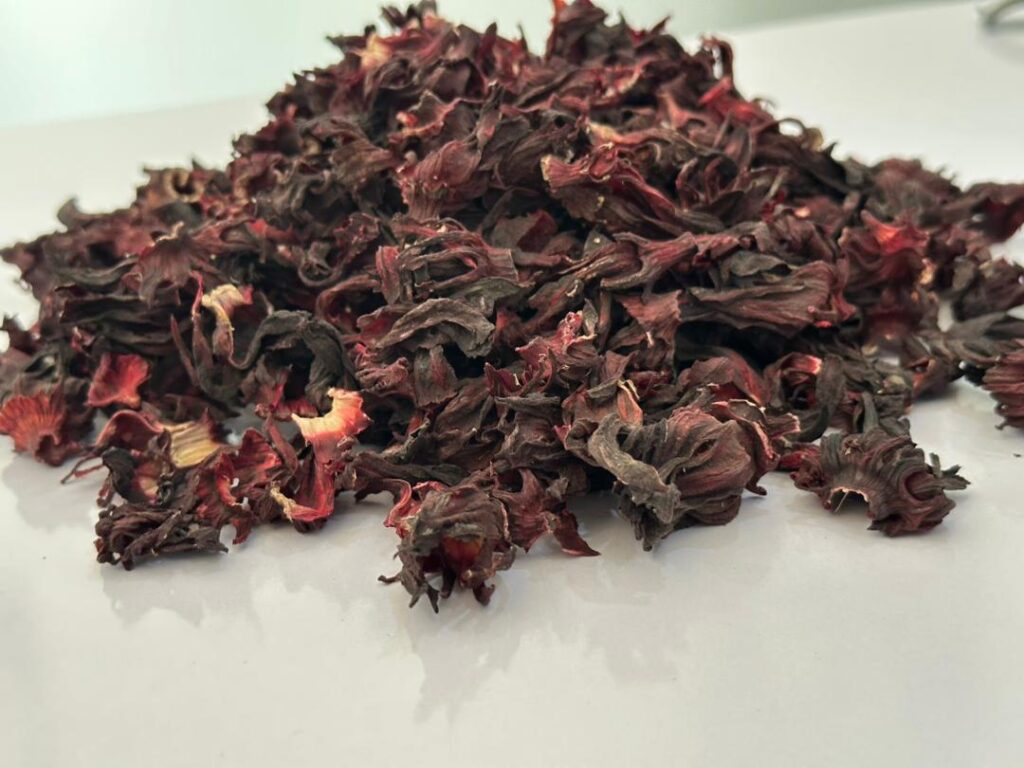
Hibiscus roselle (Hibiscus sabdariffa) offers far more than raw agricultural value. When properly processed and positioned, this vibrant flower becomes a foundation for value-added products that serve global markets. Value addition is transforming hibiscus roselle from a basic farm crop into a high-impact economic opportunity for producers, processors, and exporters.
Understanding Value Addition in Hibiscus Roselle
Value addition refers to improving a product’s market worth through processing, packaging, branding, or specialization. In the case of hibiscus roselle, value addition can begin immediately after harvest and continue through multiple stages of the supply chain.
Instead of selling only raw dried calyces, producers can create differentiated products tailored to specific industries and consumer needs.
Forms of Value Addition
Processing and Product Forms
Hibiscus roselle can be transformed into:
- Premium-grade dried calyces
- Powdered hibiscus for beverages and food use
- Concentrates and extracts for industrial applications
Each form serves a different market segment and commands different pricing structures.
Packaging and Presentation
Export-ready packaging improves product perception and shelf life. Clean labeling, traceability, and standardized weights enhance buyer confidence and open doors to higher-value markets.
Specialization and Market Targeting
Supplying hibiscus roselle for specific uses such as beverage production, wellness blends, or natural coloring allows sellers to target niche markets rather than competing solely on volume.
Economic Impact on Producers
Value addition increases income potential for farmers and processors by:
- Reducing dependency on raw commodity pricing
- Creating new employment opportunities
- Encouraging local processing industries
This shift strengthens rural economies and supports sustainable agribusiness growth.
Meeting Global Market Expectations
International buyers increasingly seek consistency, quality, and reliability. Value-added hibiscus roselle products that meet these expectations gain competitive advantage in global trade.
Investments in processing technology, quality control, and compliance with export standards are key drivers of long-term success.
Conclusion
Hibiscus roselle demonstrates how value addition can unlock the full potential of an agricultural crop. By moving beyond raw exports and embracing processing, specialization, and branding, hibiscus roselle becomes a catalyst for economic growth and global market integration. Through value addition, a simple flower is transformed into a sustainable and profitable global opportunity.