
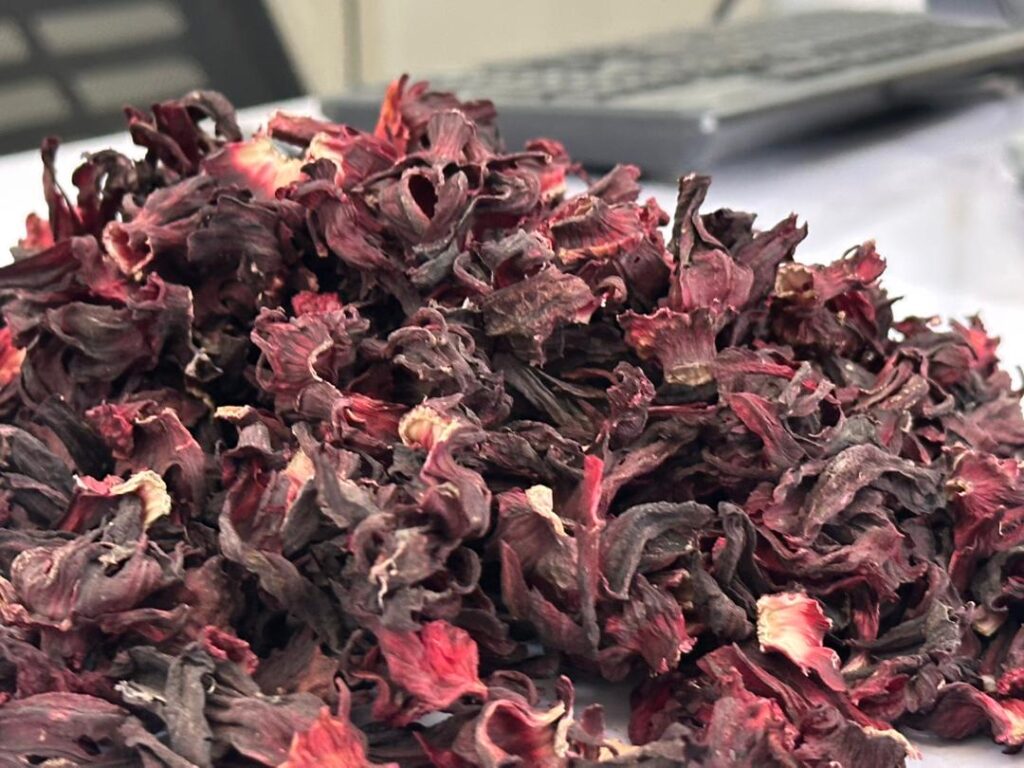
Hibiscus roselle (Hibiscus sabdariffa) is a distinctive flowering plant valued worldwide for its bold red calyces, natural acidity, and broad commercial relevance. As global industries move toward natural, traceable, and plant-based ingredients, hibiscus roselle has become an essential raw material in food production, wellness products, and international agricultural trade.
Understanding Hibiscus Roselle
Native to tropical climates, hibiscus roselle is cultivated primarily for its fleshy red calyces, which are harvested shortly after flowering. Once dried, these calyces serve as the foundation for numerous value-added products. Known globally under names such as roselle, sorrel, karkade, and zobo, the plant holds both cultural importance and economic value across Africa, Asia, and beyond.
Key Characteristics That Define Quality
High-grade hibiscus roselle is identified by:
- Deep, uniform red coloration
- Naturally tangy aroma and taste
- Low moisture content for long shelf life
- Clean, well-sorted dried calyces
These characteristics are critical for international buyers, processors, and manufacturers seeking consistency and reliability in supply.
Applications Across Multiple Industries
Food and Beverage Manufacturing
Hibiscus roselle is widely used in:
- Premium herbal teas and infusions
- Ready-to-drink beverages and concentrates
- Natural flavoring and coloring solutions
- Traditional and modern food formulations
Its natural pigmentation and flavor profile make it especially attractive to brands replacing synthetic ingredients.
Health and Functional Products
In wellness markets, hibiscus roselle is valued for its naturally occurring antioxidants and organic acids. It is commonly used in:
- Herbal wellness teas
- Functional beverage blends
- Nutritional and botanical formulations
This has driven rising demand in health-focused consumer markets.
Cosmetic and Natural Care Uses
Extracts from hibiscus roselle are increasingly incorporated into:
- Natural skincare products
- Hair care formulations
- Plant-based cosmetic ingredients
Its botanical profile aligns well with clean beauty and sustainable sourcing trends.
Cultivation and Production Advantages
Hibiscus roselle grows efficiently in warm climates and adapts well to small- and large-scale farming systems. It offers:
- Relatively short growth cycles
- Compatibility with seasonal farming
- Strong yield potential when properly managed
Careful harvesting and drying methods play a key role in preserving product quality and market value.
Global Trade and Export Potential
The international market for hibiscus roselle continues to expand due to rising consumption of herbal beverages and natural ingredients. Europe, Asia, the Middle East, and North America remain key import destinations.
Nigeria stands out as a major supplier, known for producing hibiscus roselle with strong color intensity and flavor. When processed and packaged to export standards, Nigerian hibiscus roselle competes effectively in global markets.
Why Hibiscus Roselle Is a Smart Commercial Choice
- High international demand with diverse applications
- Suitable for value-added processing
- Aligns with natural and sustainable product trends
- Supports agricultural export growth
Conclusion
Hibiscus roselle represents a unique blend of tradition, functionality, and commercial opportunity. Its wide industrial use, growing global demand, and natural appeal make it a strategic ingredient for manufacturers and a valuable export crop for producing countries. As markets continue to prioritize quality and natural sourcing, hibiscus roselle remains a trusted choice for businesses seeking long-term value and reliability.