
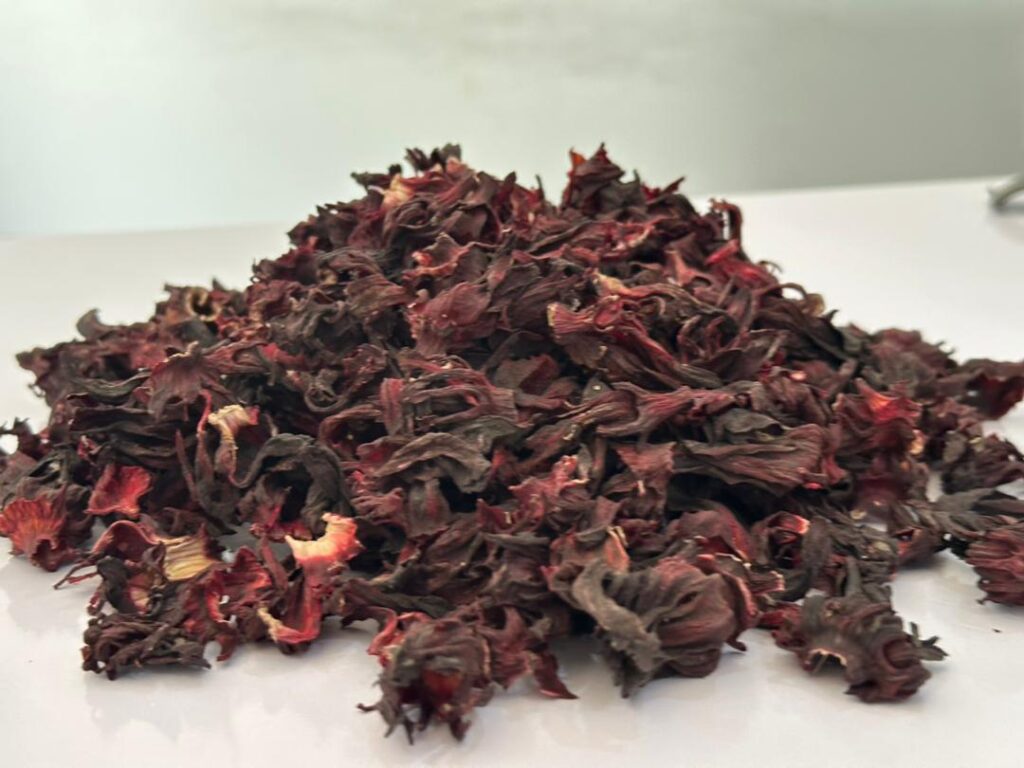
Hibiscus roselle (Hibiscus sabdariffa) is a premium tropical crop increasingly valued for its natural qualities, stable demand, and wide commercial usability. Recognized by its vivid red calyces and refreshing acidity, hibiscus roselle has become an important ingredient for global industries seeking natural, plant-based, and export-ready raw materials.
Background and Agricultural Value
Hibiscus roselle is cultivated in warm regions where sunlight and seasonal rainfall support healthy growth. The plant develops quickly and fits well into rotational farming systems, making it an efficient crop for producers. Its red calyces are harvested at maturity and dried using controlled methods to maintain color strength, purity, and shelf life.
Because of its adaptability and relatively low input requirements, hibiscus roselle plays a meaningful role in agricultural value chains and rural economies.
Natural Features That Drive Market Demand
What makes hibiscus roselle commercially attractive is its natural performance. The flower offers:
- A deep red pigment suitable for natural coloring
- A crisp, tangy flavor profile ideal for beverages
- Compatibility with clean-label and plant-based formulations
These features allow manufacturers to meet consumer expectations without relying on artificial additives.
Commercial Uses Across Key Sectors
Beverages and Food Products
Hibiscus roselle is widely used in:
- Herbal teas and infusions
- Ready-to-drink beverages
- Juice concentrates and syrups
- Traditional and contemporary food products
Its ability to deliver both flavor and visual appeal enhances product quality and marketability.
Wellness and Botanical Markets
In wellness-focused sectors, hibiscus roselle is incorporated into:
- Herbal drink blends
- Botanical formulations
- Plant-based lifestyle products
Its long-standing use in traditional drinks supports its acceptance in modern wellness markets.
Natural Ingredient Applications
Beyond food and beverages, hibiscus roselle contributes to:
- Natural cosmetic and personal-care products
- Botanical extracts
- Fiber materials derived from plant stems
This diversity strengthens its economic importance.
Quality Control and Export Readiness
For international trade, quality consistency is essential. Export-grade hibiscus roselle is characterized by:
- Uniform red calyces
- Low moisture content
- Clean sorting and handling
- Secure, export-standard packaging
Adhering to these requirements improves buyer confidence and supports long-term partnerships.
Global Demand and Trade Outlook
Demand for hibiscus roselle continues to rise in Europe, Asia, the Middle East, and North America, driven by increased consumption of herbal beverages and natural products. Importers value hibiscus roselle for its reliability, versatility, and compatibility with multiple industries.
Nigeria is among the leading suppliers, offering hibiscus roselle that meets international quality expectations when processed and packaged to export standards.
Conclusion
Hibiscus roselle stands as a dependable natural crop with strong global relevance. Its adaptability, broad applications, and alignment with modern market trends make it a strategic choice for farmers, exporters, and manufacturers. As global demand for natural ingredients continues to grow, hibiscus roselle remains a reliable link between sustainable agriculture and international markets.