
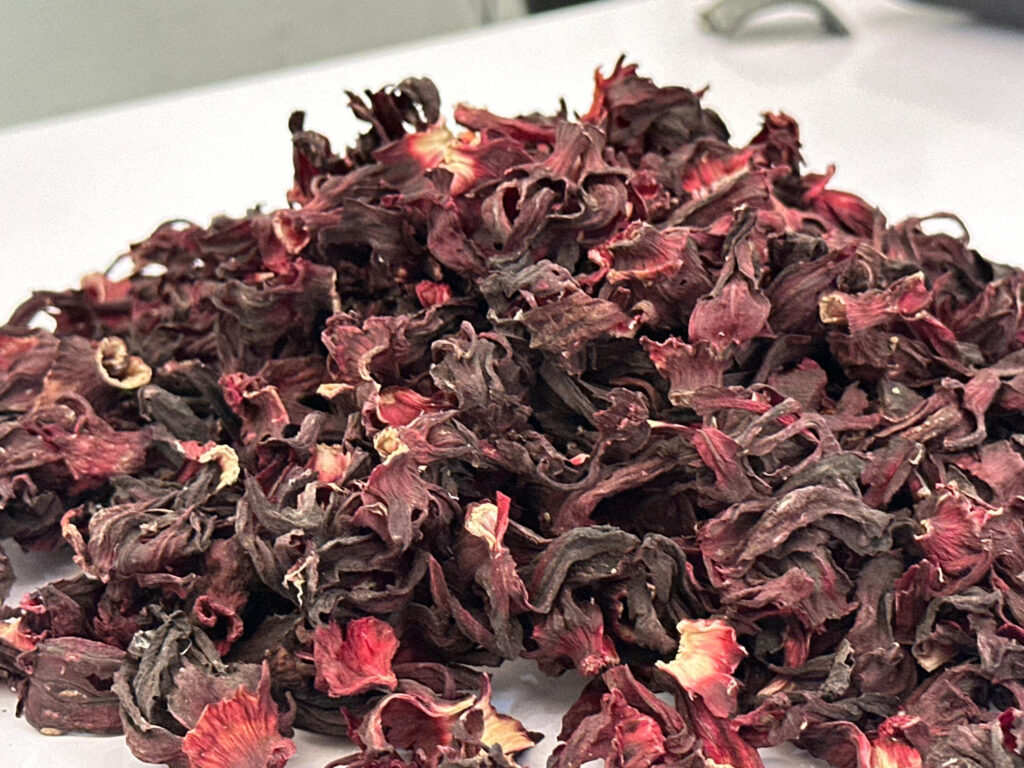
Hibiscus flower (Hibiscus sabdariffa) has become an increasingly strategic ingredient in global supply chains, not because it is exotic, but because it is economically sound. As manufacturers reassess ingredient sourcing to balance cost, performance, and sustainability, hibiscus offers a rare combination of natural functionality and operational efficiency.
Efficiency Starts at Origin
Hibiscus thrives in warm climates where cultivation relies on established agricultural practices rather than intensive inputs. After harvest, the calyces are dried to stabilize their structure and properties. This simple process preserves quality while extending shelf life, allowing hibiscus to move from farm to factory with minimal degradation.
The result is a raw material that supports consistent production planning and reduces supply uncertainty.
Reducing Complexity in Formulation
In product development, hibiscus provides more than one benefit at a time. Its natural pigmentation contributes visual appeal, while its organic acids enhance flavor profiles. This multifunctionality enables manufacturers to simplify formulations, lower ingredient counts, and improve label clarity.
Such efficiency is especially valuable in food, beverage, and wellness production where clean-label expectations continue to rise.
Market Demand Driven by Function, Not Fashion
Unlike trend-driven ingredients, hibiscus maintains demand because it fulfills ongoing technical needs. It performs reliably in both traditional applications and modern product categories, making it adaptable across regions and regulatory frameworks.
This functional relevance ensures long-term market stability rather than short-lived popularity.
Global Supply and Trade Readiness
Hibiscus is well suited to international trade. In dried form, it is compact, durable, and easy to handle. These attributes reduce transportation risks and make quality control more predictable for buyers.
Nigeria has emerged as a notable supplier by aligning agricultural output with export requirements, offering hibiscus that meets international specifications for color, moisture content, and cleanliness.
Conclusion
Hibiscus flower represents the practical side of natural sourcing. It is not defined by novelty or storytelling, but by measurable performance and economic sense. As industries continue to demand ingredients that are reliable, efficient, and naturally derived, hibiscus remains a sound choice in global markets.