
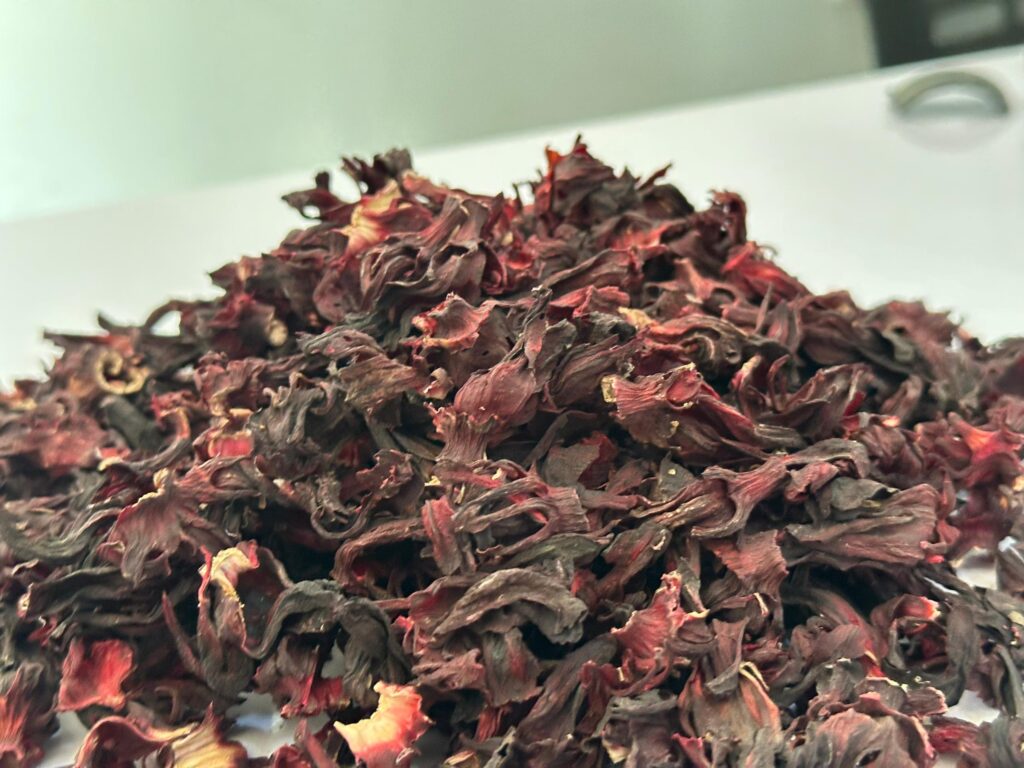
Global trade depends on systems that are simple, repeatable, and efficient. Hibiscus flower (Hibiscus sabdariffa) fits naturally into this architecture. Its value is not built on complexity, but on how smoothly it moves from field to finished product.
A Crop Shaped for Order
Hibiscus is cultivated with clear purpose. When harvested at the correct stage and dried under controlled conditions, the calyces retain uniform color, acidity, and structure. This order at the agricultural level translates directly into consistency at the commercial level.
Minimal Intervention, Maximum Utility
One of hibiscus’s key strengths is how little intervention it requires to become market-ready. Drying stabilizes the product without altering its natural properties, allowing hibiscus to remain flexible for different industrial uses while preserving its identity as a natural ingredient.
Designed for Cross-Border Movement
Dried hibiscus travels well. It tolerates storage, handling, and long transit times without significant loss of quality. These characteristics reduce logistical pressure and make the product suitable for structured international trade systems.
Supply Discipline and Market Confidence
Markets reward suppliers who deliver consistency. Producing regions that emphasize sorting, grading, and packaging reinforce buyer trust. Nigeria’s growing focus on export standards has strengthened its role as a reliable source of hibiscus in global markets.
A Stable Position in a Changing Market
As industries shift toward transparency and efficiency, hibiscus remains relevant by meeting these expectations without reinvention. Its performance is steady, its demand diversified, and its role clearly defined.
Conclusion
Hibiscus flower demonstrates how order and discipline create lasting value in trade. By combining natural resilience with structured handling and scalable supply, it serves as a dependable component of global commerce. In a market shaped by complexity, hibiscus succeeds through clarity.