
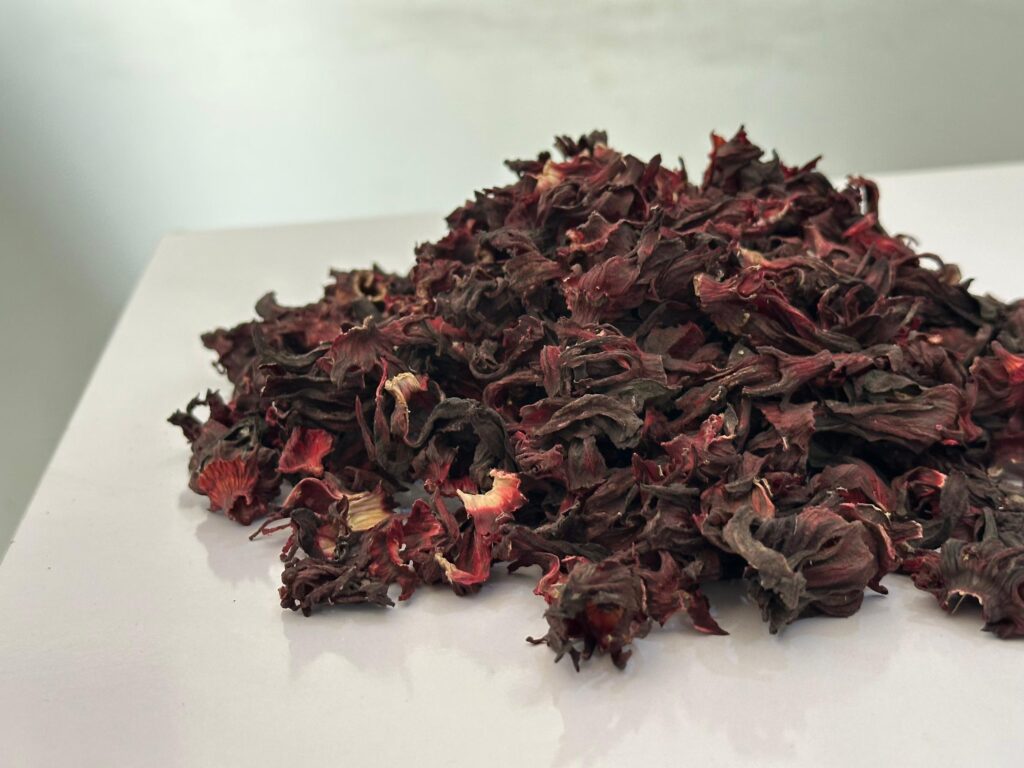
Modern supply chains favor agricultural products that integrate smoothly from origin to end use. Hibiscus flower (Hibiscus sabdariffa) has proven its value by fitting naturally into structured systems that prioritize consistency, efficiency, and long-term planning.
Integration Begins at Cultivation
The commercial strength of hibiscus starts in the field. When cultivation follows established planting cycles and harvesting occurs at optimal maturity, the calyces develop uniform characteristics. This uniformity simplifies every stage that follows, from drying to grading.
Post-Harvest Alignment
Drying transforms hibiscus into a stable, trade-ready product. Controlled moisture reduction preserves color and acidity while extending shelf life. When post-harvest practices are aligned with export standards, hibiscus moves through the supply chain with minimal friction.
Consistency for Industrial Planning
Manufacturers and processors rely on inputs that perform predictably. Hibiscus supports production planning by delivering repeatable results across batches. This predictability reduces the need for reformulation and supports efficient scheduling.
Efficiency in Distribution and Trade
Dried hibiscus is well suited for international movement. Its durability allows for flexible storage and long-distance shipping without significant quality loss. Clear specifications and standardized packaging further simplify cross-border trade.
Supply Regions and Continuous Improvement
Producing countries that invest in export readiness strengthen global supply stability. Nigeria continues to improve its role through better handling practices, quality control, and alignment with international market expectations.
Strategic Value in Long-Term Markets
As markets increasingly favor dependable sourcing over experimental alternatives, hibiscus stands out as a practical choice. Its integration across agriculture, processing, and trade supports sustained demand.
Conclusion
Hibiscus flower demonstrates how integration creates lasting value. By aligning cultivation, processing, and distribution within a disciplined framework, it supports efficient supply chains and long-term commercial growth. In an environment shaped by complexity, hibiscus offers continuity and reliability.