
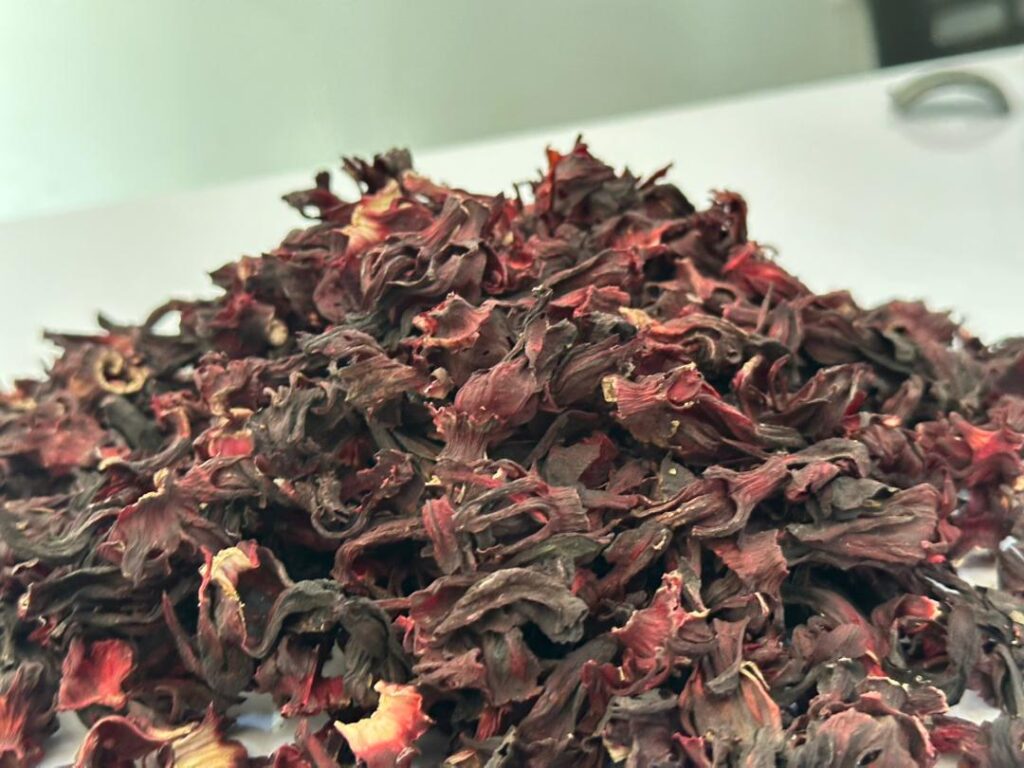
Hibiscus flower (Hibiscus sabdariffa) plays a subtle yet important role in global agriculture and natural ingredient supply. While often recognized for its color and flavor, its true value lies in how efficiently it fits into modern production and trade systems.
Designed by Nature for Stability
Hibiscus develops thick calyces that respond well to drying. When moisture is carefully reduced, the product becomes stable, lightweight, and easy to manage. This natural stability allows hibiscus to travel long distances and remain suitable for processing months after harvest.
A Working Ingredient, Not a Decorative One
In commercial use, hibiscus is selected for performance. Its natural acidity enhances flavor profiles, while its deep red pigment supports clean-label product design. These characteristics make it useful in beverages, food formulations, botanical preparations, and natural personal care products.
Trade Without Complexity
Unlike many agricultural products that require cold storage or chemical preservation, dried hibiscus moves through the supply chain with minimal intervention. This reduces operational risk and supports predictable delivery schedules an important advantage for international buyers.
Supply Roots in Producing Regions
Countries with consistent growing conditions form the backbone of hibiscus supply. Nigeria is among the key contributors, offering export-grade hibiscus supported by experienced cultivation and improving quality practices. Attention to sorting, drying, and packaging strengthens buyer confidence.
Why the Market Keeps Choosing Hibiscus
Hibiscus continues to perform in global trade because it is:
- Naturally resilient in dried form
- Efficient to store and ship
- Flexible across multiple industries
- Aligned with demand for natural ingredients
Final Reflection
Hibiscus flower does not seek attention, yet it delivers lasting value. Its ability to combine natural simplicity with commercial reliability ensures its place in global markets for years to come.