
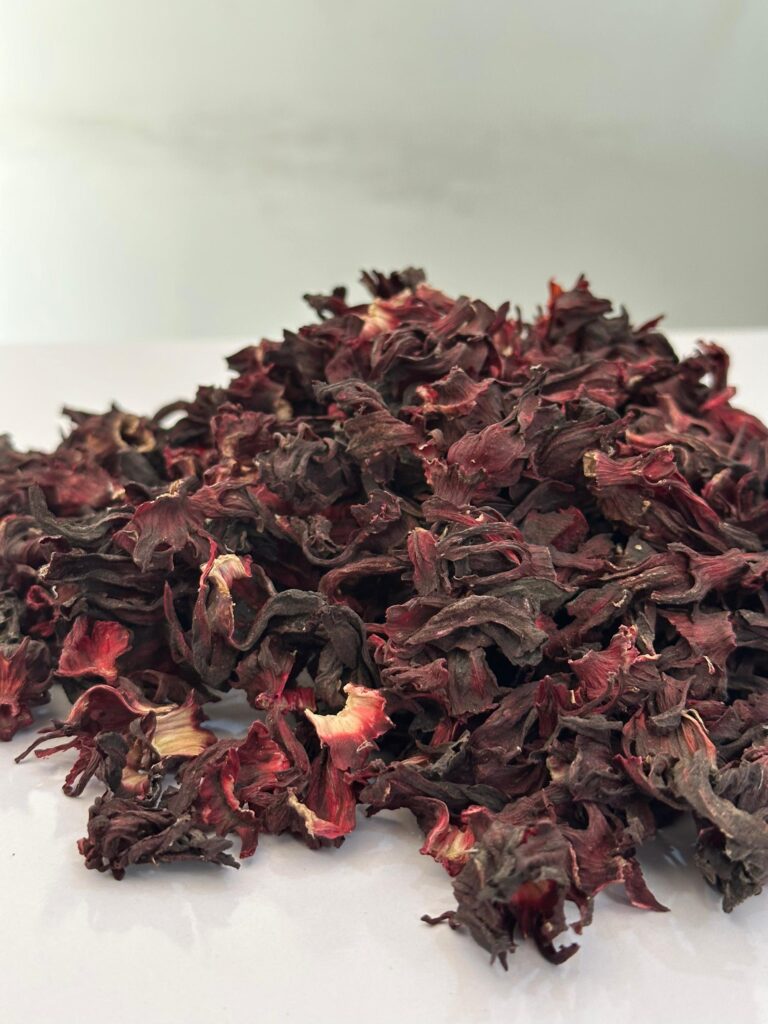
Hibiscus flowers (Hibiscus Sabdariffa) have evolved from a traditional agricultural crop into a strategic raw material for global food, beverage, and wellness industries. Appreciated for their intense red color, natural acidity, and functional benefits, hibiscus flowers are now a core ingredient for manufacturers seeking clean-label and plant-based solutions. Our dried hibiscus flowers are cultivated and processed in Nigeria, where natural growing conditions and experienced farming practices support consistent export-grade quality.
A Production Model Focused on Consistency
Consistency is critical for international buyers. Our hibiscus production is structured around defined agricultural and post-harvest protocols rather than opportunistic sourcing. Cultivation follows seasonal cycles that allow plants to mature naturally, while harvesting is carried out only when calyces reach optimal size, color intensity, and acidity balance.
This controlled approach reduces batch variation and ensures reliable performance for buyers operating standardized production processes.
Quality Characteristics Valued by Manufacturers
Our dried hibiscus flowers are evaluated based on functional and commercial performance. Key attributes include:
- Strong, stable red pigmentation suitable for infusion and extraction
- Clean, balanced tartness that integrates smoothly into formulations
- Controlled moisture levels to ensure long shelf life
- Low levels of stems, dust, and foreign matter
These qualities help reduce reprocessing costs and improve efficiency at the manufacturing stage.
A Versatile Ingredient for Modern Markets
Hibiscus Sabdariffa is widely used across multiple global industries. It serves as a core ingredient in:
- Herbal, fruit, and functional tea blends
- Beverage concentrates, syrups, and ready-to-drink products
- Natural food and beverage coloring systems
- Botanical extracts, nutraceuticals, and wellness formulations
Its caffeine-free and plant-based profile makes hibiscus especially attractive to brands responding to health-conscious consumer demand.
Post-Harvest Handling That Protects Value
After harvest, hibiscus flowers are dried under controlled conditions to preserve color, aroma, and structural integrity. This is followed by staged cleaning and sorting processes designed to remove impurities without damaging the calyces. Each lot undergoes inspection to verify moisture stability and visual quality before approval for export packing.
This disciplined post-harvest system ensures product stability during long-distance shipping and extended storage.
Export Packaging and Trade Readiness
Our hibiscus flowers are packed in food-grade, export-approved materials designed for international logistics. Packaging options are selected to protect the product from humidity, compression, and contamination during transit. Each shipment is supported by complete and accurate export documentation, enabling smooth customs clearance in destination markets.
Samples are available to support quality evaluation, regulatory review, and product development.
Built for Long-Term Supply Relationships
We believe successful trade is built on predictability and trust. Our role extends beyond supply to include clear communication, stable specifications, and dependable fulfillment. This approach allows our partners to plan production confidently and scale their operations without supply uncertainty.
Start a Reliable Hibiscus Supply Program
If you are looking for a dependable source of high-grade dried hibiscus flowers tailored for global trade, we invite you to contact us. Our team is ready to discuss specifications, volumes, pricing, and sampling to support your long-term sourcing strategy.