
- 1. Favorable Growing Conditions
- 2. Large-Scale and Distributed Production
- 3. Harvesting and Post-Harvest Handling
- 4. Quality Characteristics for Global Markets
- 5. Processing and Export Preparation
- 6. Applications Across Multiple Industries
- 7. Reliable Trade and Supply Confidence
- 8. Long-Term Value for Buyers
1. Favorable Growing Conditions
Hibiscus flower production in Nigeria benefits from warm temperatures, seasonal rainfall, and fertile soil. These natural conditions support healthy plant development and contribute to the deep red color and strong calyx formation valued by international buyers. The environment allows hibiscus to grow naturally with consistent quality across harvest seasons.
2. Large-Scale and Distributed Production
Hibiscus cultivation in Nigeria is spread across multiple agricultural regions, creating a broad production base. This geographic distribution reduces supply risk and ensures stable output levels. As a result, Nigeria is able to meet bulk export demand while maintaining quality consistency.
3. Harvesting and Post-Harvest Handling
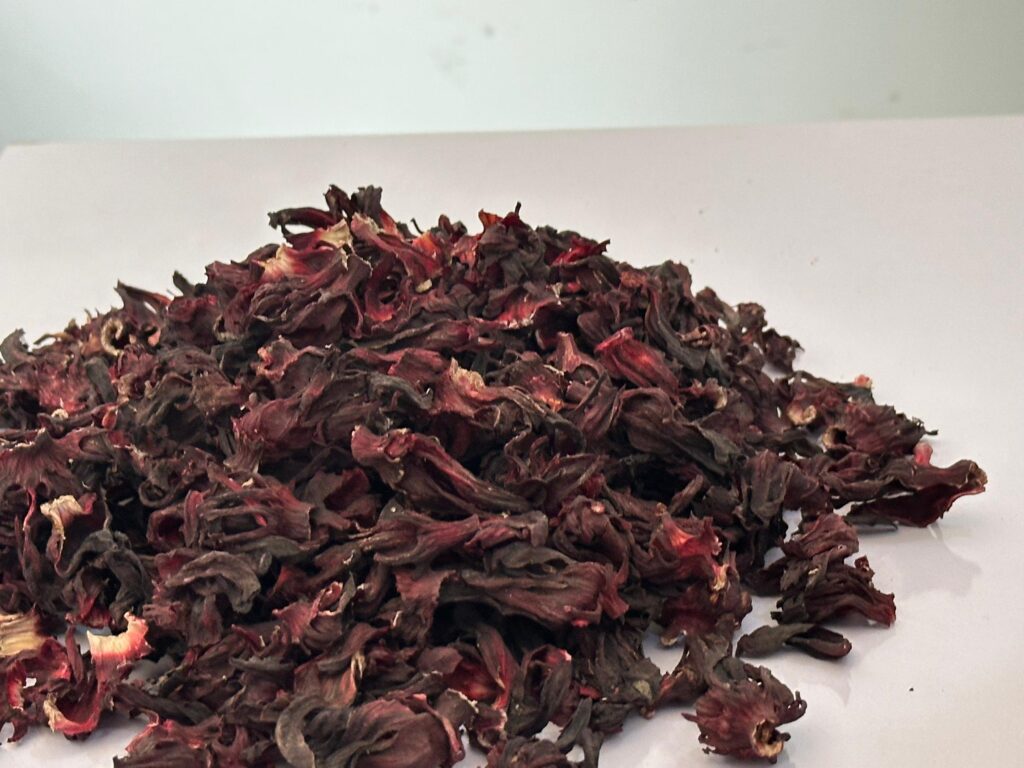
After maturity, hibiscus calyces are carefully harvested and dried to reduce moisture while preserving color and aroma. Proper drying is essential for shelf stability and export suitability. The flowers are then cleaned and sorted to remove foreign matter and ensure uniform appearance.
4. Quality Characteristics for Global Markets
Nigerian hibiscus flower is known for:
- Rich red coloration
- Low and stable moisture content
- Clean, well-sorted appearance
- Good shelf life for storage and shipping
These characteristics make it suitable for use in tea manufacturing, beverage production, food processing, and wellness applications.
5. Processing and Export Preparation
Export-grade hibiscus is graded according to buyer requirements and packed in protective packaging designed for long-distance transportation. This preparation helps maintain product integrity from origin to destination and supports smooth international trade.
6. Applications Across Multiple Industries
Hibiscus flower from Nigeria is widely used in:
- Herbal and fruit teas
- Natural drinks and concentrates
- Food ingredients and flavoring
- Nutritional and wellness products
- Plant-based cosmetic formulations
Its versatility increases demand across different sectors and reduces reliance on a single market.
7. Reliable Trade and Supply Confidence
Nigeria’s experience in agricultural exports supports dependable supply schedules and competitive pricing. Buyers sourcing hibiscus from Nigeria benefit from steady volumes, improving logistics, and growing alignment with international trade standards.
8. Long-Term Value for Buyers
Sourcing hibiscus flower from Nigeria offers long-term advantages, including supply stability, cost efficiency, and consistent product quality. It also supports rural farming communities and sustainable agricultural development.