
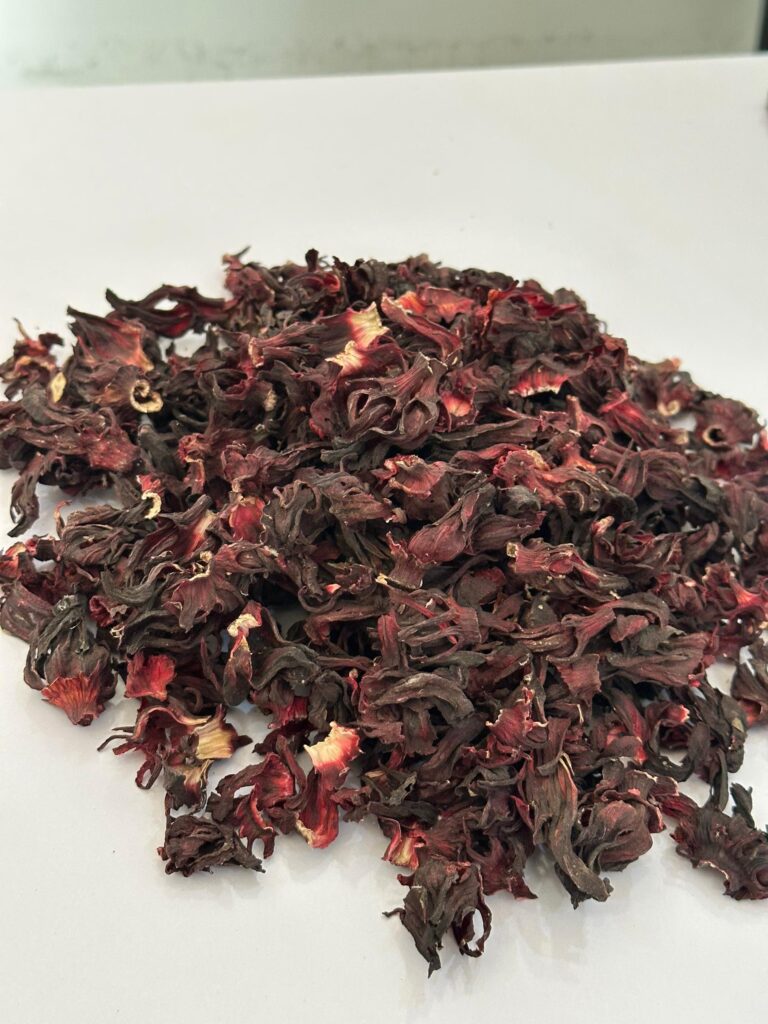
Successful agricultural commodities are those that create value at every stage of production and trade. Hibiscus flower (Hibiscus sabdariffa) stands out because its value chain is naturally balanced, allowing efficiency to flow from cultivation through to final use.
Efficiency Begins in Cultivation
Hibiscus grows well under defined climatic conditions and responds reliably to established farming practices. When planting and harvesting follow proper timing, the calyces develop uniform characteristics that simplify downstream processing and grading.
Post-Harvest Handling That Preserves Value
Drying plays a central role in the hibiscus value chain. By carefully reducing moisture content, producers convert a fresh flower into a stable commodity without altering its natural properties. This step protects quality, extends shelf life, and reduces post-harvest losses.
Clear Standards Support Smooth Trade
Hibiscus lends itself to standardization. Quality parameters such as color intensity, cleanliness, and calyx size can be clearly defined and measured. These standards reduce disputes, improve pricing transparency, and support repeat transactions.
Industrial Compatibility Across Markets
Manufacturers value hibiscus for its functional simplicity. It integrates easily into production systems for beverages, herbal blends, and natural formulations, allowing consistent results without complex adjustments.
Logistics Designed for Reliability
The physical stability of dried hibiscus supports efficient storage and long-distance transport. Its resistance to spoilage lowers risk during shipping and helps maintain quality until final delivery.
Supplying Regions and Continuous Improvement
Producing countries that invest in better handling practices strengthen global supply confidence. Nigeria’s ongoing focus on quality control and export readiness contributes to a more reliable and competitive hibiscus market.
Conclusion
Hibiscus flower succeeds because its value chain works as a unified system. Each stage cultivation, processing, standardization, and distribution reinforces the next. In global markets that reward efficiency and reliability, hibiscus remains a well-balanced and enduring agricultural commodity.