
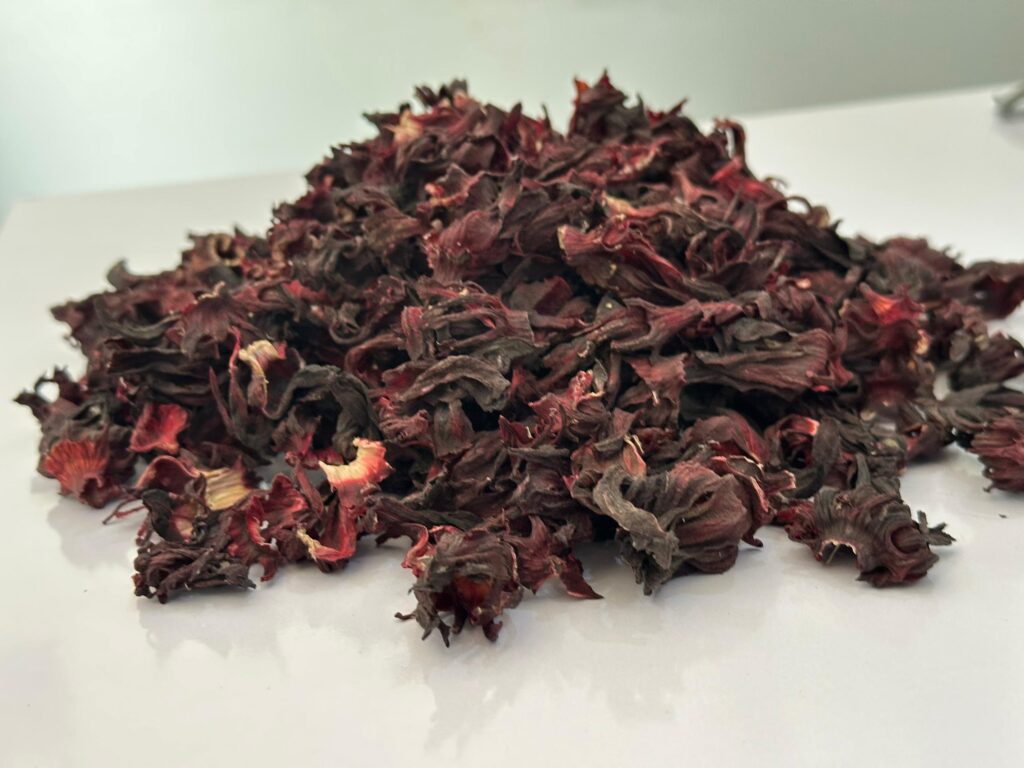
In global agricultural trade, certain commodities achieve importance not through rapid market trends, but through sustained performance and dependable supply. Hibiscus flower (Hibiscus sabdariffa) represents one of these strategic natural commodities. Its commercial strength lies in its ability to combine agricultural simplicity with industrial versatility, creating a product that consistently meets international market expectations.
A Crop Defined by Natural Efficiency
Hibiscus cultivation is rooted in climates that support steady growth and predictable harvest cycles. Farmers cultivate the plant using established agricultural practices that emphasize timing, care, and environmental suitability. When harvested at the correct maturity stage, hibiscus calyces develop their characteristic deep color and balanced acidity, both of which are essential to commercial quality.
Unlike many crops that require extensive transformation after harvest, hibiscus retains most of its functional value through controlled drying alone. This efficiency reduces production complexity while preserving the product’s natural composition, making hibiscus highly attractive in markets that prioritize minimal processing.
The Role of Post-Harvest Discipline
Post-harvest handling plays a defining role in the global acceptance of hibiscus. Proper drying stabilizes moisture content, preventing deterioration and extending storage life. Sorting and cleaning further enhance product consistency, ensuring that hibiscus meets export-grade standards.
These disciplined processes transform hibiscus from a perishable flower into a durable agricultural commodity capable of traveling across continents while maintaining quality. For buyers, this reliability supports procurement planning and reduces the risk associated with long-distance sourcing.
Versatility Across Industrial Applications
One of the most significant advantages of hibiscus is its adaptability across multiple industries. The flower contributes natural pigmentation, mild acidity, and botanical authenticity, allowing it to function as a foundational ingredient in beverages, food formulations, wellness products, and personal care applications.
Manufacturers value hibiscus because it delivers multiple functional properties within a single natural ingredient. This reduces formulation complexity and supports clean-label product development, a growing priority in modern manufacturing.
Logistics and Trade Compatibility
International trade requires agricultural products to perform well beyond the field. Hibiscus excels in this regard due to its low moisture content and stable physical structure. It can be packaged efficiently, stored for extended periods, and transported over long distances with minimal degradation.
These logistical strengths make hibiscus particularly suitable for structured trade systems, where consistency, compliance, and predictable delivery schedules are essential.
Nigeria’s Expanding Role in Global Supply
Nigeria has become one of the most influential producers and exporters of hibiscus in the global market. The country benefits from favorable climatic conditions and experienced farming communities that have cultivated hibiscus for generations.
Recent improvements in harvesting techniques, drying methods, grading systems, and export packaging have strengthened Nigeria’s position as a reliable source of high-quality hibiscus. As global demand continues to grow, Nigeria’s contribution remains essential to maintaining stable supply chains.
Market Alignment With Global Trends
The global ingredient market is shifting toward transparency, sustainability, and natural sourcing. Hibiscus naturally aligns with these priorities. Its plant-based origin, limited processing requirements, and traceable supply pathways support regulatory compliance and consumer trust.
Unlike products that require constant rebranding to maintain relevance, hibiscus retains market value through its functional reliability and broad cultural acceptance.
Economic and Strategic Importance
Beyond its functional uses, hibiscus represents an economic opportunity for producing regions. Its export potential supports rural agricultural communities, encourages structured farming practices, and strengthens participation in international trade.
For importers and manufacturers, hibiscus offers a stable raw material that balances cost efficiency with product integrity. This dual economic advantage reinforces its position as a strategic agricultural commodity.
Conclusion
Hibiscus flower stands as a powerful example of how natural commodities can achieve long-term commercial success through discipline, consistency, and adaptability. Its ability to maintain quality from cultivation through international distribution reflects a product built on reliability rather than temporary market excitement.
As global industries continue to prioritize natural ingredients, operational efficiency, and sustainable sourcing, hibiscus remains exceptionally well positioned to meet these demands. By combining agricultural tradition with modern trade requirements, hibiscus secures its place as a dependable and strategically valuable component of global commerce.