
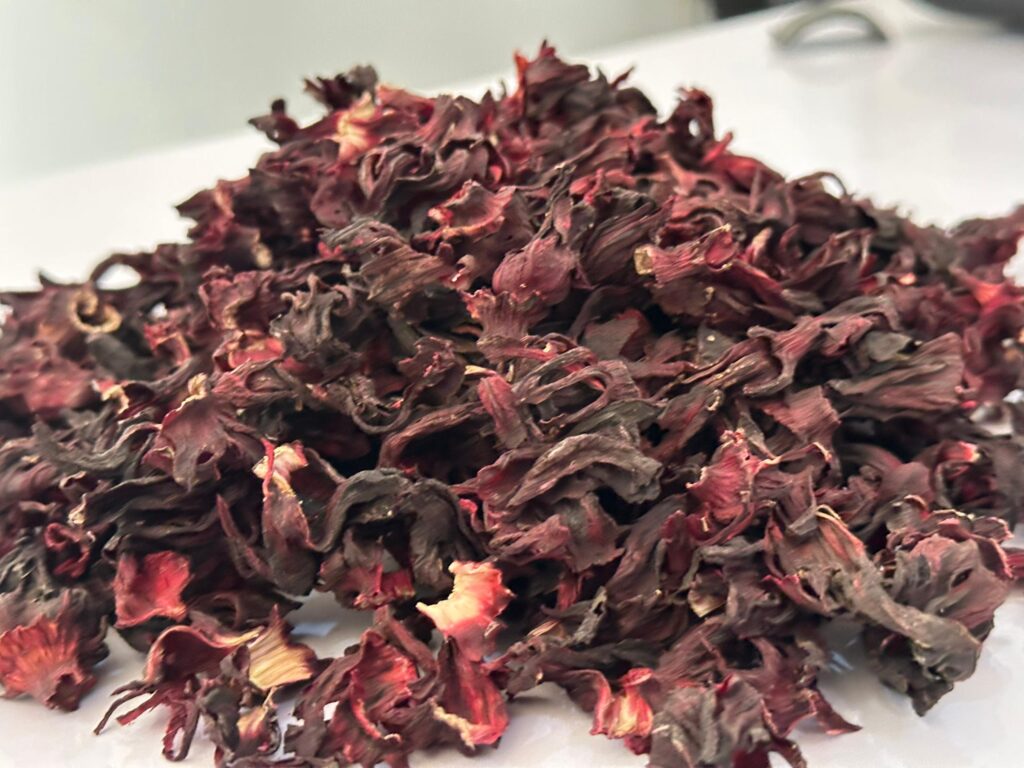
In agricultural trade, complexity often increases cost without improving outcomes. Hibiscus flower (Hibiscus sabdariffa) offers the opposite model: a product whose simplicity creates economic efficiency across the supply chain.
Value Preserved Through Simple Processing
Hibiscus requires only careful harvesting and controlled drying to become commercially viable. This limited processing preserves its natural properties while reducing energy use, handling time, and waste. The result is a raw material that holds value with minimal intervention.
Lower Costs, Clear Outcomes
For buyers and manufacturers, hibiscus provides clarity. Its stable characteristics allow predictable pricing, straightforward quality assessment, and consistent performance in production. This reduces hidden costs associated with reformulation, spoilage, or supply disruption.
Operational Ease in Global Trade
Dried hibiscus is easy to package, store, and ship. Its shelf stability supports flexible inventory management, while its physical durability reduces loss during transit. These advantages make hibiscus a low-friction product in international commerce.
Supply Alignment and Market Trust
Producing regions that prioritize drying standards and cleanliness strengthen market confidence. Nigeria’s continued improvements in post-harvest handling and export readiness contribute to a supply environment built on trust rather than speculation.
A Rational Fit for Modern Markets
As global markets emphasize efficiency, transparency, and sustainable sourcing, hibiscus aligns naturally with these priorities. Its economic value is reinforced by its ability to deliver consistent results without unnecessary complexity.
Conclusion
Hibiscus flower demonstrates that simplicity can be a powerful competitive advantage in modern agricultural trade. Its strength lies not in heavy processing or constant innovation, but in the way natural resilience is preserved through efficient, disciplined handling. From cultivation to drying and export, each step adds stability rather than complexity, allowing the product to retain its core value.
By offering consistent quality, long shelf life, and ease of transportation, hibiscus reduces uncertainty across the supply chain. These characteristics support reliable planning for producers, exporters, and manufacturers, while minimizing operational risk and unnecessary cost. In a global market increasingly shaped by efficiency, transparency, and long-term thinking, hibiscus stands out as a product aligned with rational decision making. Its ability to deliver dependable results over time ensures sustainable growth and reinforces its role as a trusted natural commodity in international trade