
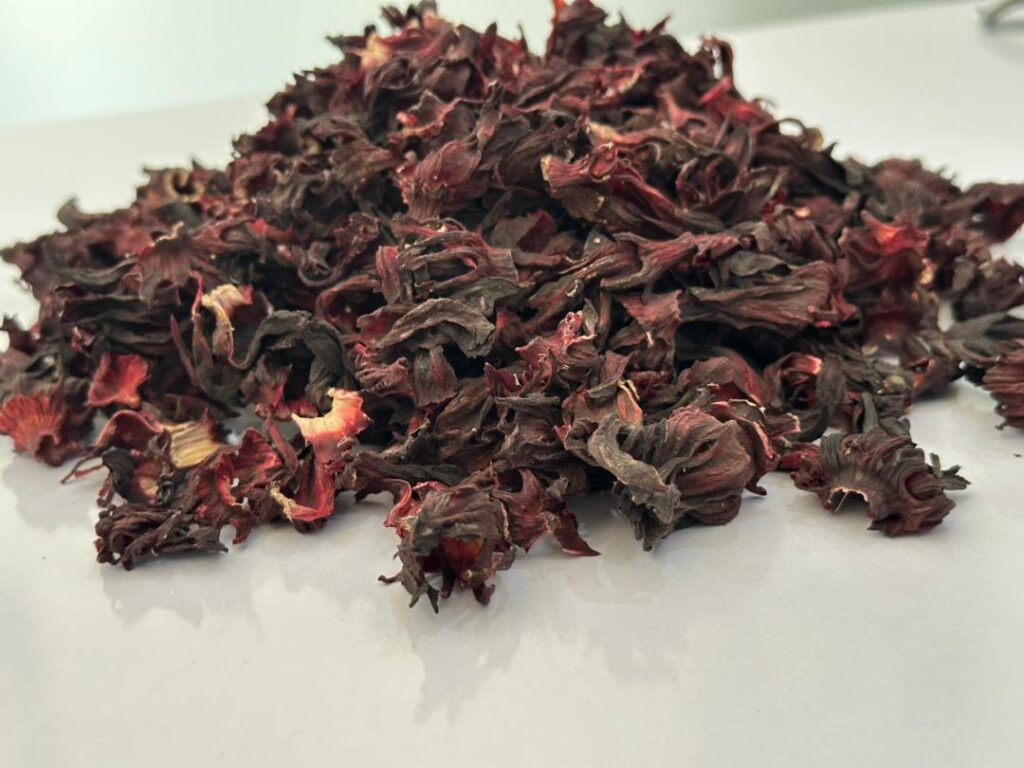
Hibiscus roselle (Hibiscus sabdariffa) is not simply an agricultural crop it is a natural solution that answers modern market needs for authenticity, sustainability, and versatility. Distinguished by its deep crimson calyces and refreshing acidity, hibiscus roselle has evolved into a globally traded ingredient used across food, beverage, wellness, and natural-product industries.
A Flower with Commercial Intelligence
Unlike many single use crops, hibiscus roselle delivers multiple functions in one natural ingredient. It provides color, flavor, and botanical value without synthetic enhancement. This makes it especially attractive to manufacturers and buyers who aim to simplify formulations while meeting clean-label and plant-based standards.
Its ability to perform consistently in different climates and product formats gives hibiscus roselle a strategic advantage in global supply chains.
From Field to Finished Product
The value of hibiscus roselle begins at the farm. Cultivated in warm regions, the plant matures efficiently and produces calyces that are harvested at peak color intensity. Careful drying and handling preserve the flower’s natural attributes, ensuring it remains stable during storage, transport, and processing.
This balance between traditional farming knowledge and modern quality expectations supports its reliability in international trade.
A Natural Asset Across Industries
Flavor and Visual Enhancement
Hibiscus roselle is widely used to:
- Create naturally vibrant beverages
- Add tart balance to drink and food formulations
- Replace artificial coloring and flavoring agents
Its presence enhances both the sensory and visual appeal of consumer products.
Botanical Value in Lifestyle Products
In wellness and lifestyle markets, hibiscus roselle is incorporated into:
- Botanical drink blends
- Plant-based lifestyle formulations
- Natural ingredient systems
Its botanical identity adds authenticity and consumer trust.
Beyond Consumption
The plant’s value extends beyond food and drink. Extracts and fibers derived from hibiscus roselle are used in:
- Natural personal-care formulations
- Botanical extracts
- Eco-conscious material applications
Quality as a Market Language
In global trade, quality speaks louder than quantity. Premium hibiscus roselle is recognized by:
- Strong, consistent red coloration
- Clean, well-formed calyces
- Controlled moisture for long shelf life
These attributes communicate reliability and professionalism to international buyers.
Global Demand, Local Opportunity
As global consumers move toward natural and traceable products, demand for hibiscus roselle continues to expand. Markets in Europe, Asia, the Middle East, and North America value the crop for its performance, adaptability, and natural credibility.
Producing countries such as Nigeria play a key role in supplying export-grade hibiscus roselle, contributing to agricultural diversification and trade growth.
Conclusion
Hibiscus roselle represents a meeting point between nature and modern commerce. Its multifunctional character, natural efficiency, and growing global relevance set it apart from conventional agricultural products. More than a flower, hibiscus roselle is a strategic natural ingredient connecting farms, industries, and international markets through quality, simplicity, and trust.