
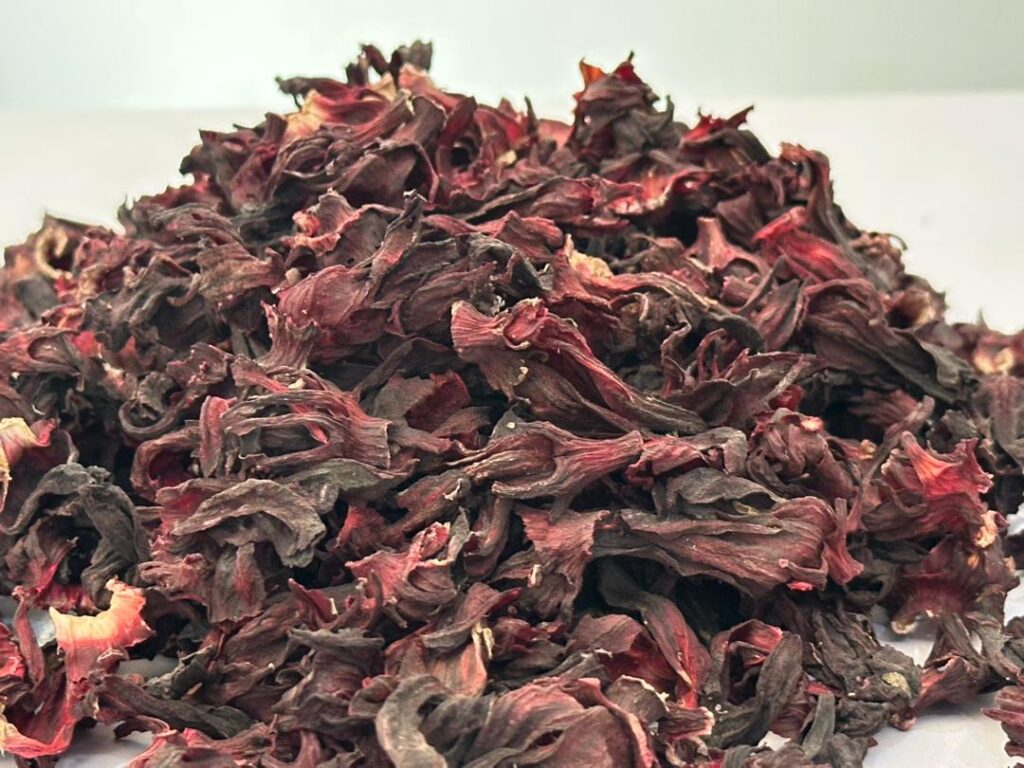
Hibiscus roselle (Hibiscus sabdariffa) is a distinctive flowering plant that has gained strong international recognition for its natural qualities and commercial versatility. Celebrated for its rich red calyces and refreshing acidity, hibiscus roselle has become an essential raw material for food, beverage, wellness, and natural-ingredient industries across the world.
Natural Origin and Cultivation
Hibiscus roselle thrives in warm tropical climates and is well suited to seasonal agricultural systems. The plant matures within a short growing cycle, allowing farmers to harvest the calyces shortly after flowering. Once harvested, the calyces are carefully dried to preserve their color, aroma, and natural properties, making them suitable for long-term storage and export.
This adaptability makes hibiscus roselle a reliable crop for both small-scale farmers and commercial producers.
What Makes Hibiscus Roselle Unique
The global appeal of hibiscus roselle lies in its natural combination of color, flavor, and functionality. Its deep red pigment provides a plant-based coloring solution, while its clean, tart taste enhances beverages and foods without the need for artificial additives. These qualities strongly align with today’s consumer demand for natural and transparent ingredients.
Key Applications in Global Industries
Food and Beverage Sector
Hibiscus roselle is widely used in:
- Herbal and specialty teas
- Hot and cold beverages
- Juice blends, syrups, and concentrates
- Traditional and modern food products
Its stability and natural appeal make it suitable for both artisanal and large-scale production.
Wellness and Lifestyle Products
In wellness markets, hibiscus roselle is incorporated into:
- Herbal tea blends
- Botanical drinks
- Plant-based wellness formulations
Its traditional association with refreshment supports its ongoing popularity.
Natural Ingredient and Industrial Uses
Beyond consumables, hibiscus roselle is also utilized in:
- Natural cosmetic and skincare formulations
- Botanical extracts
- Fiber production from plant stems
This wide range of uses increases its overall economic value.
Quality Standards and Market Expectations
International buyers prioritize quality and consistency. Premium hibiscus roselle is defined by:
- Bright, uniform red calyces
- Proper drying for extended shelf life
- Low moisture content
- Clean handling and secure packaging
Meeting these standards strengthens buyer confidence and long-term trade relationships.
Global Market Demand
The demand for hibiscus roselle continues to grow across Europe, Asia, the Middle East, and North America. This growth is driven by rising consumption of herbal beverages, natural food ingredients, and plant-based lifestyle products.
Nigeria remains one of the leading producers and exporters of hibiscus roselle, supplying international markets with competitively priced and high-quality dried flowers.
Conclusion
Hibiscus roselle is more than a traditional flower it is a globally valued agricultural product with strong commercial relevance. Its natural characteristics, diverse applications, and increasing international demand position it as a strategic crop for modern agribusiness. From cultivation to global trade, hibiscus roselle continues to connect nature, quality, and opportunity.