
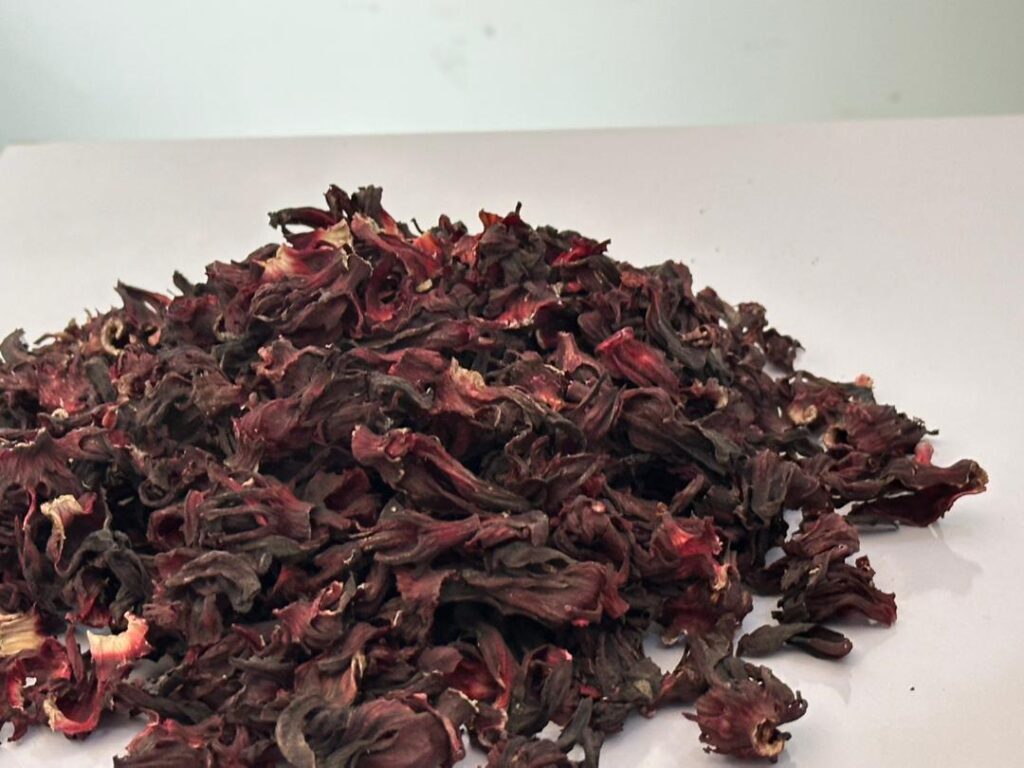
Hibiscus flower (Hibiscus sabdariffa) has earned its place in international markets as a consistent and efficient natural input. Its commercial relevance is not based on trend, but on its ability to deliver dependable results across production cycles and industries.
Naturally Suited for Processing
The calyces of hibiscus develop dense pigmentation and balanced acidity during growth. When harvested at the right stage and dried under controlled conditions, they form a stable raw material that retains quality over time. This stability supports long-term storage and smooth transportation without compromising performance.
Practical Value in Manufacturing
Hibiscus is widely selected by manufacturers for its functional contribution. It supports product formulation by adding natural color and flavor while fitting clean-label requirements. As a result, it is used in beverage infusions, food preparations, botanical mixtures, and personal care products that prioritize plant-based ingredients.
Structured Global Demand
Demand for hibiscus comes from multiple segments of the global market. Some buyers rely on it for daily consumer goods, while others integrate it into large-scale processing. This layered demand structure creates resilience and supports continuous international trade.
Export Supply and Origin
Producing countries with favorable climates are central to maintaining supply consistency. Nigeria stands out as a reliable source, supported by agricultural expertise and increasing alignment with export quality standards. Careful post-harvest handling ensures hibiscus meets international buyer expectations.
Why Hibiscus Remains Competitive
Hibiscus continues to be preferred because it is:
- Plant-based and minimally processed
- Durable in dried form
- Efficient to store and transport
- Suitable for diverse industrial uses
Conclusion
Hibiscus flower represents efficiency in its simplest form. Its natural stability, broad functionality, and steady demand position it as a valuable agricultural product within global supply chains and long-term international trade.